
ADVERTISEMENT
The Great Broccoli Betrayal
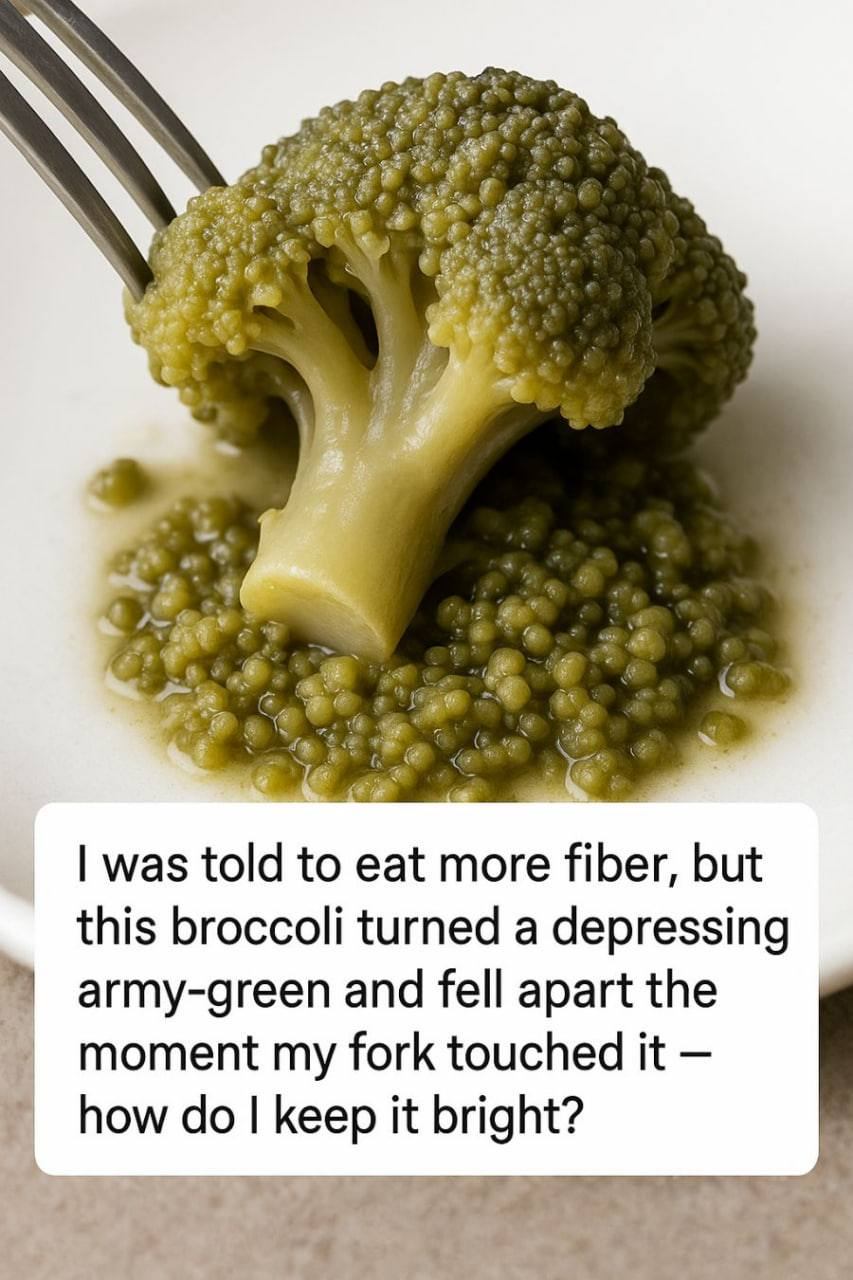
If you’ve ever overcooked broccoli, you know the feeling. The water turns vaguely greenish-brown. The florets lose their definition. The stems surrender completely.
You stand there wondering how something that started so vibrant could end up looking like it had seen too much of the world.
This isn’t just a personal failure. It’s a common one.
Broccoli is one of the most frequently overcooked vegetables in modern kitchens. Not because people don’t care, but because broccoli feels like it should be forgiving. It looks sturdy. It’s thick. It’s not leafy and delicate like spinach.
But broccoli is lying to you.
Why Broccoli Turns Army-Green in the First Place
To keep broccoli bright, you have to understand what makes it lose its color.
Broccoli is green because of chlorophyll, the same pigment that makes leaves green. Chlorophyll is sensitive. It doesn’t like prolonged heat, acidic environments, or being forgotten on the stove while you scroll your phone.
When broccoli cooks too long, several things happen:
Chlorophyll breaks down, dulling the color
Cell walls weaken, causing the structure to collapse
Sulfur compounds are released, creating that unpleasant smell
Water floods the cells, turning crisp florets into mush
In other words, overcooked broccoli doesn’t just look sad—it is sad.
The Fiber Irony
Here’s the cruel twist: you were told to eat more fiber for your health, digestion, longevity, or general adult responsibility. But overcooking broccoli actually reduces some of the very benefits you’re trying to get.
While fiber itself is fairly heat-stable, the texture changes make broccoli less enjoyable, which means you’re less likely to eat it again. And some vitamins—like vitamin C—are significantly diminished by long cooking times.
So now you’re staring at a plate of limp green regret, wondering if ordering pizza would have been more honest.
The Myth That Vegetables Must Be Boiled to Death
A lot of us learned to cook vegetables from people who meant well but had limited information.
Vegetables were boiled.
Sometimes salted.
Often ignored.
Occasionally punished.
The goal was “soft enough to eat,” not “pleasant.”
Broccoli suffered greatly under this philosophy.
But vegetables are not pasta. They do not need to surrender completely to heat to be edible. In fact, broccoli thrives on brief, intense cooking or gentle, controlled exposure—not extended submersion in boiling water like it’s serving a sentence.
The Number One Rule: Time Is the Enemy
If you remember only one thing, remember this:
Broccoli cooks much faster than you think.
Most methods that preserve brightness and texture involve cooking broccoli for 2 to 5 minutes, not 10, not 15, and definitely not “until I remember it’s there.”
Once broccoli passes the point of tenderness, it doesn’t slowly get worse—it collapses rapidly.
There is a narrow window between “perfect” and “army-green despair.”
Boiling Broccoli Without Destroying It
Let’s address boiling first, because it’s where many people go wrong.
Boiling broccoli can work, but only if you do it intentionally.
Here’s how to keep it bright:
Salt the water heavily
It should taste like the sea. This helps preserve color and flavor.
Use a lot of water
Crowding broccoli lowers the temperature and increases cooking time.
Bring the water to a full rolling boil first
Do not add broccoli to lukewarm water.
Cook for 2–3 minutes max
Set a timer. Don’t trust vibes.
Shock it in ice water immediately
This stops the cooking and locks in the color.
If you skip the ice bath, residual heat will continue cooking the broccoli, even after it’s out of the pot.
This is how many well-intentioned people end up with mush.
Steaming: Better, But Still Dangerous
Steaming is often recommended as a healthier alternative, and it is gentler—but it’s not foolproof.
The problem with steaming is that people think it’s impossible to overdo. It isn’t.
Steamed broccoli should be:
Bright green
Tender-crisp
Easily pierced with a fork, but not collapsing
This usually takes 3–5 minutes, depending on the size of the florets.
The moment it turns olive-green, you’ve gone too far.
Pro tip: lift the lid and check early. Steam traps heat aggressively.
Roasting: Where Broccoli Finds Its Confidence
If boiling betrayed you emotionally, roasting might restore your trust.
Roasting broccoli transforms it. The edges caramelize. The flavor deepens. The texture stays firm. And most importantly—it stays green (with some intentional browning).
To roast broccoli successfully:
Preheat the oven fully (425°F / 220°C)
Dry the broccoli well after washing
Toss with oil and salt before roasting
Spread in a single layer (no crowding)
Roast for 15–20 minutes, turning once
The key here is dry heat. Moisture is what leads to collapse. Roasting evaporates water quickly, preventing that army-green slump.
Stir-Frying: Fast, Hot, and Bright
Stir-frying is one of the best methods for color retention, because it’s fast and high-heat.
Broccoli loves urgency.
In a hot pan with oil:
Add broccoli
Toss constantly
Cook for 2–4 minutes
If you want it more tender, add a tablespoon of water and cover briefly to steam, then uncover and let excess moisture evaporate.
This hybrid method gives you bright color and tenderness without surrender.
The Acid Question: Lemon, Vinegar, and Timing
Acid affects chlorophyll.
Adding acid before or during cooking can dull broccoli’s color. This is why broccoli cooked in tomato sauces or with vinegar often looks muted.
But acid added after cooking is your friend.
A squeeze of lemon or splash of vinegar at the end enhances flavor without destroying color. Timing matters.
For Complete Cooking STEPS Please Head On Over To Next Page Or Open button (>) and don’t forget to SHARE with your Facebook friends
ADVERTISEMENT
