
ADVERTISEMENT
Why Vinegar Works in Laundry (The Science, Simply Explained)
White distilled vinegar is essentially diluted acetic acid. That might sound harsh, but in laundry terms, it’s actually very gentle—far gentler than bleach.
Here’s what vinegar does exceptionally well:
- It Breaks Down Alkaline Residue
Most laundry detergents are alkaline. Over time, they leave behind a film on fabric fibers, especially towels and whites. This residue:
Traps dirt
Traps odors
Makes fabrics stiff
Causes whites to look dull or gray
Vinegar is acidic, so it dissolves this buildup. It doesn’t coat fabric—it cleans it.
- It Softens Fibers Without Coating Them
Commercial fabric softeners work by leaving a waxy layer on fabric. That layer feels soft at first, but over time it:
Reduces absorbency (especially in towels)
Traps smells
Makes whites yellow
Vinegar softens by removing residue, not adding anything.
- It Neutralizes Odors
Odors are often caused by bacteria or chemical residue. Vinegar neutralizes the source rather than covering it with fragrance.
This is why towels that smell “clean but musty” often improve dramatically after a vinegar rinse.
The Biggest Mistake: Using Vinegar With Detergent
This is where most people go wrong.
They add vinegar at the same time as detergent, either:
Directly into the drum
Into the detergent compartment
During the wash cycle
Here’s the problem:
Vinegar neutralizes detergent.
Because detergent is alkaline and vinegar is acidic, adding them together cancels out much of the cleaning power. You’re essentially undoing your own effort.
That’s why many people say:
“I tried vinegar and didn’t notice much difference.”
They used it at the wrong time.
The Golden Rule of Laundry Vinegar
Vinegar belongs in the rinse cycle, not the wash cycle.
Think of vinegar as:
A finisher
A reset button
A deep-cleaning rinse
Detergent removes dirt.
Vinegar removes what detergent leaves behind.
They are teammates—but only if they work separately.
How to Use Vinegar for Whiter Whites (The Right Way)
Whites don’t turn dull because they’re dirty. They turn dull because of buildup.
Step-by-Step for Whites
Wash whites normally
Use your regular detergent. Don’t add vinegar yet.
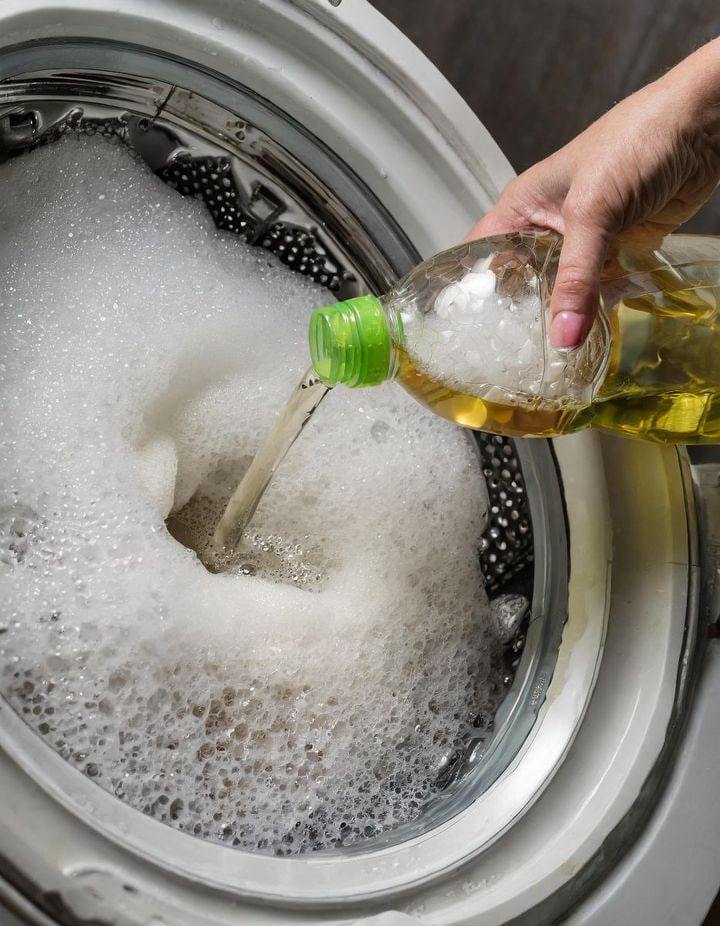
Add vinegar to the rinse cycle
Use ½ to 1 cup of white distilled vinegar
Pour it into the fabric softener compartment, or
Add it manually during the rinse cycle
Dry as usual
The vinegar smell will disappear completely once dry.
Why This Works
Vinegar dissolves detergent residue that traps grime
It removes mineral deposits from hard water
It restores light reflection, making whites look brighter
Importantly, vinegar does not bleach fabric. It restores what’s already there.
How to Use Vinegar for Softer Towels (Without Ruining Absorbency)
Towels are the biggest victims of detergent and softener misuse.
If your towels:
Feel stiff
Smell sour or musty
Aren’t absorbent
Feel rough even after washing
That’s not because they’re old. It’s because they’re coated.
The Right Towel Method
Wash towels with detergent only
Skip fabric softener entirely.
Add 1 cup of white vinegar to the rinse cycle
This strips residue from deep within the fibers.
Dry thoroughly
Damp towels encourage odor-causing bacteria.
What Not to Do
Don’t use vinegar and fabric softener
Don’t pour vinegar directly on dry towels
Don’t use more than 1 cup (more is not better)
After one or two washes, most people notice:
Better absorbency
Softer texture
Cleaner smell
The “Laundry Reset” for Stubborn Buildup
If whites are gray or towels feel permanently crunchy, you may need a reset wash.
Reset Method (Occasional Use)
Wash with hot water and detergent only
Run a second cycle with no detergent, 1–2 cups vinegar
Dry completely
This is especially helpful for:
Gym clothes
Kitchen towels
Cloth diapers
Hard-water households
Do not do this every wash. Once every few months is enough.
Common Vinegar Myths (That Cause Problems)
Myth 1: “More Vinegar Means Better Results”
False. Excess vinegar can:
Make fabrics stiff
Stress elastic fibers
Leave a sour smell if not rinsed properly
Stick to ½–1 cup.
Myth 2: “Vinegar Replaces Detergent”
No. Vinegar cleans residue, not dirt.
You still need detergent for:
Oils
Sweat
Soil
Body grime
Vinegar enhances detergent—it doesn’t replace it.
Myth 3: “Vinegar Smell Stays in Clothes”
Only if:
You use too much
The load isn’t rinsed properly
Clothes aren’t dried fully
Proper use leaves no scent at all.
Myth 4: “Vinegar Ruins Washing Machines”
White distilled vinegar is safe when used occasionally and properly.
Problems arise when people:
Use it every load
Use concentrated vinegar
Pour it directly onto rubber seals repeatedly
Moderation matters.
Where Exactly to Put the Vinegar
This matters more than people realize.
For Complete Cooking STEPS Please Head On Over To Next Page Or Open button (>) and don’t forget to SHARE with your Facebook friends
ADVERTISEMENT
