
ADVERTISEMENT
Why Is There a Purple Spot on My Chicken Breast? A Complete Guide for Home Cooks
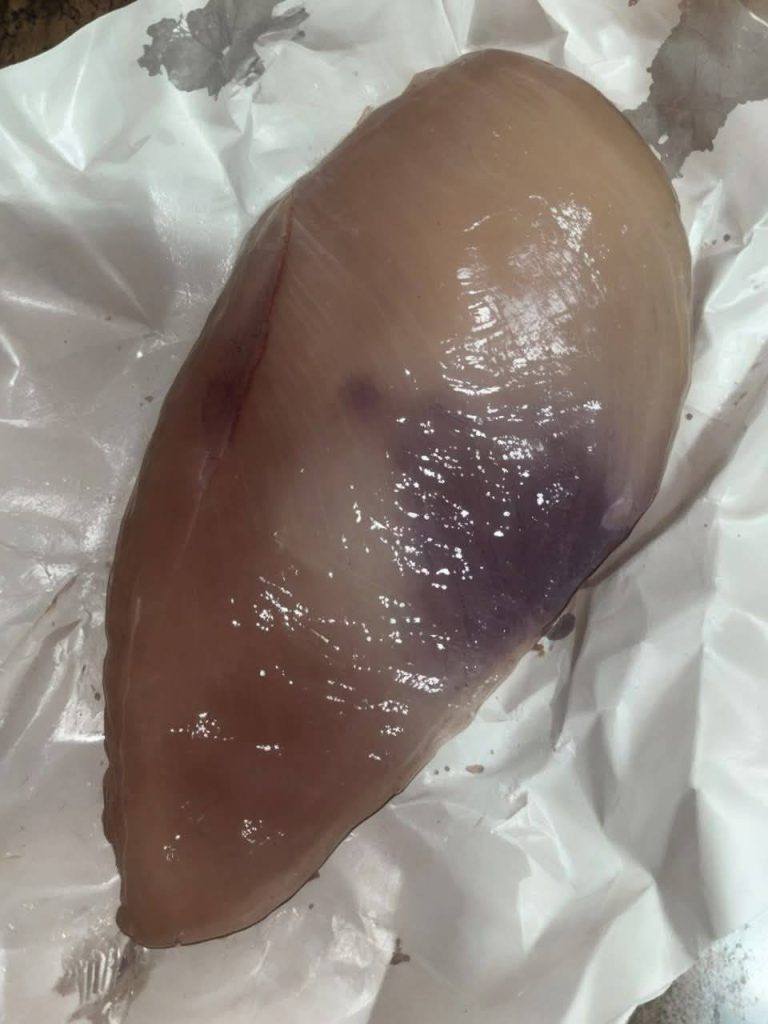
You take a chicken breast out of the package, set it on the cutting board, and suddenly notice something that makes you pause: a purple or dark reddish spot on the meat.
Your first thought might be:
Is this safe to eat?
Is the chicken spoiled?
Did something go wrong during processing?
You’re not alone. This is a surprisingly common question, and while it can look alarming, the answer is often far less scary than it appears.
In this in-depth guide, we’ll explore what causes purple spots on chicken breast, when it’s safe to eat, when you should throw it away, and how to prevent this issue in the future. By the end, you’ll be able to confidently assess your chicken — no guesswork required.
Understanding What You’re Seeing
Before jumping to conclusions, it’s important to understand that raw chicken meat can show a wide range of colors, especially before cooking. Chicken is not naturally pure white — that pale color only becomes consistent after cooking.
A purple spot can appear for several reasons, most of which are normal and harmless.
The Most Common Reasons for a Purple Spot on Chicken Breast
- Blood Spots or Bruising (Most Common Cause)
The most frequent reason for purple or dark red spots on chicken breast is bruising or pooled blood.
How It Happens
During processing, chickens may experience minor trauma.
Small blood vessels under the skin or within the muscle can rupture.
Blood pools in one area, creating a purple, red, or dark brown spot.
This is similar to a bruise on human skin — except it’s visible because there’s no thick skin covering it.
Is It Safe?
Yes. Blood spots and bruises are not harmful if the chicken is otherwise fresh and properly cooked.
What You Can Do
Trim the discolored portion if it bothers you.
Cook the chicken thoroughly — the color usually disappears or darkens after cooking.
- Bone Marrow Leakage
Sometimes what looks like a purple or reddish spot is actually bone marrow showing through the meat.
Why This Happens
Chicken breast meat is thin near the rib bones.
When frozen, bone marrow can expand.
This can cause pigments to seep into surrounding meat.
This is especially common in:
Frozen chicken
Younger birds
Mechanically cut pieces
Is It Safe?
Yes. Bone marrow discoloration is completely safe and does not indicate spoilage.
- Oxygen Exposure and Oxidation
Chicken meat changes color depending on its exposure to oxygen.
Low oxygen → darker, purplish tones
High oxygen → lighter, pinkish hues
This is due to myoglobin, a natural protein found in muscle tissue.
Important Note
A purple spot caused by oxidation does not mean the chicken is bad.
Once exposed to air for a short time, the color often lightens.
- Improper Bleeding During Processing
During commercial processing, chickens are bled after slaughter. Occasionally, this process is incomplete.
What Happens
Residual blood remains in certain muscles.
This blood darkens over time, appearing purple or maroon.
Is It Common?
Yes — especially in mass-produced poultry.
Is It Safe?
Yes. As long as the chicken smells normal and isn’t slimy, it’s safe when cooked thoroughly.
- Freezer Damage or Partial Freezing
Freezing affects meat structure and color.
Signs of Freezer-Related Discoloration
Purple, grayish, or dark patches
Uneven coloring
Slight dryness in spots
This can occur if:
Chicken partially thawed and refroze
Packaging wasn’t airtight
Is It Safe?
Yes, if:
There’s no foul smell
No excessive freezer burn
The chicken has been stored properly
Texture may suffer slightly, but safety is not compromised.
- Pressure Marks from Packaging
Vacuum sealing or tight packaging can cause localized pressure.
Result
Blood or pigment is pushed into one area
Creates a dark or purple spot
Once the chicken is removed from packaging and exposed to air, this discoloration may fade.
- Natural Muscle Variation
Not all chicken breast meat is uniform.
Some muscles contain more myoglobin
Darker areas can appear naturally
This is more noticeable in free-range or organic chickens
These variations are completely normal.
When a Purple Spot Might Be a Warning Sign
While most purple spots are harmless, there are times when discoloration should raise concern.
Signs You Should NOT Ignore
❌ Strong sour or rotten odor
❌ Sticky or slimy texture that doesn’t rinse off
❌ Green, gray, or iridescent sheen
❌ Mold (fuzzy or powdery spots)
❌ Excessive gas or bloating in the package
If a purple spot appears alongside these signs, discard the chicken immediately.
How to Tell If Chicken Is Safe to Eat
Use all your senses, not just your eyes.
- Smell Test
Fresh chicken smells:
Mild
Slightly meaty
Neutral
Bad chicken smells:
Sulfur-like
Sour
Rotten eggs
If it smells bad, don’t taste it.
- Texture Test
Fresh chicken:
Slightly moist
Firm
Spoiled chicken:
Slimy
Sticky
Mushy
A purple spot alone does not equal spoilage — slime does.
- Color Check
Normal raw chicken can be:
Pale pink
Light purple
White with darker areas
Concerning colors:
Green
Gray
Rainbow sheen
Black mold-like spots
What Happens to the Purple Spot When You Cook Chicken?
In most cases:
Blood spots turn brown or gray
Purple hues disappear
The meat looks uniform after cooking
As long as chicken reaches an internal temperature of 165°F (74°C), it’s safe to eat regardless of prior discoloration.
Should You Cut the Spot Off?
This is optional.
Reasons to Trim
Visual discomfort
Large blood clots
Uneven texture
When It’s Not Necessary
Small spots
No odor or slime
Proper cooking planned
Trimming is a personal preference, not a safety requirement.
Does This Affect Taste or Texture?
Generally, no.
Blood spots may taste slightly metallic if undercooked
Fully cooked chicken tastes normal
Texture differences are minimal
Marinating the chicken can help balance any subtle flavor differences.
Does Organic or Free-Range Chicken Get Purple Spots?
Yes — sometimes more often.
Why?
Less processing
Smaller operations
More natural muscle development
This doesn’t indicate lower quality — just fewer cosmetic treatments.
How to Prevent Purple Spots in the Future
You can’t control everything, but these tips help:
For Complete Cooking STEPS Please Head On Over To Next Page Or Open button (>) and don’t forget to SHARE with your Facebook friends
ADVERTISEMENT
