
ADVERTISEMENT
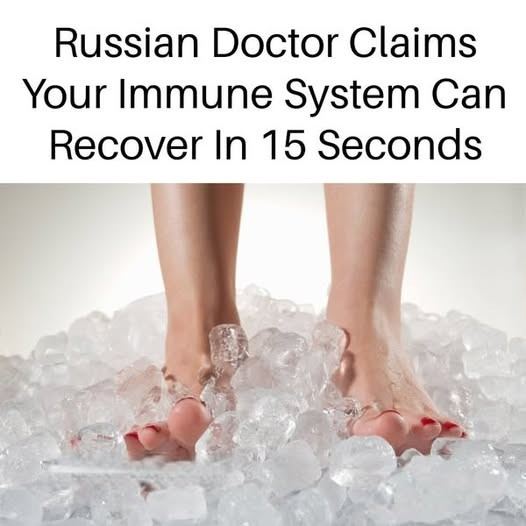
A Russian Doctor Claims Your Immune System Can Recover in Only 15 Seconds — Here’s What Science Actually Says
You may have seen the headline circulating online:
“Russian doctor claims your immune system can recover in only 15 seconds.”
It’s a powerful statement. Hopeful. Comforting. Almost miraculous.
In a world where people are constantly searching for fast fixes to stress, illness, fatigue, and immune weakness, a claim like this spreads quickly — especially when paired with breathing techniques, pressure points, or simple movements that promise instant results.
But can the immune system really “recover” in 15 seconds?
The short answer is: no — not in the way most people think.
The longer, more important answer is far more interesting — and far more useful.
This article explores:
Where the 15-second immune claim likely comes from
What actually can change in seconds inside the body
What the immune system really is and how it works
Why people feel better almost instantly with certain techniques
The difference between immune activation, regulation, and recovery
How to support immune health realistically and safely
Let’s separate hope from hype — without dismissing the body’s real, remarkable abilities.
Where Does the “15 Seconds” Claim Come From?
Claims like this often originate from:
Translated interviews or clips from Eastern European doctors
Nervous system or reflexology demonstrations
Breathing or pressure techniques
Misinterpretation of stress-response research
Social media oversimplification
In many cases, the original doctor did not say the immune system is fully restored in 15 seconds — but rather that certain regulatory responses can be influenced almost immediately.
That distinction matters.
What People Mean When They Say “Immune System Recovery”
When most people hear “immune recovery,” they imagine:
Killing viruses instantly
Reversing illness immediately
Restoring immune cells to full strength
Undoing chronic immune suppression
That is not biologically possible in seconds.
The immune system:
Is complex
Operates on hours, days, and weeks
Requires cell production, signaling, and coordination
However — and this is key — immune function is tightly connected to the nervous system, which can change rapidly.
The Immune System: A Brief Reality Check
The immune system includes:
White blood cells (T cells, B cells, macrophages)
Antibodies
Cytokines
Bone marrow
Lymph nodes
Spleen
Gut-associated immune tissue
These components:
Communicate chemically
Multiply over time
Adapt based on exposure
Require energy, nutrients, and rest
No known medical process can regenerate or “reset” this system in seconds.
So why do people feel better so quickly?
What Can Change in 15 Seconds: The Nervous System
Here’s where the confusion begins — and where the claim gets its traction.
The Nervous System Reacts Instantly
Unlike the immune system, the autonomic nervous system can shift rapidly.
In seconds, the body can:
Slow heart rate
Lower stress hormones
Activate the vagus nerve
Reduce muscle tension
Change breathing patterns
Alter perception of symptoms
This creates a felt improvement, which many people interpret as immune recovery.
Stress and Immunity: The Missing Link
Chronic stress is one of the strongest suppressors of immune function.
Stress increases:
Cortisol
Adrenaline
Inflammatory signaling
Blood sugar dysregulation
When stress decreases — even briefly — the immune system functions more efficiently.
So if a technique reduces stress quickly, people may feel:
Clearer
Calmer
Less symptomatic
More energetic
This feels like immune recovery — but it’s actually immune regulation.
The Vagus Nerve and the “Instant Relief” Effect
Many techniques associated with the 15-second claim involve:
Deep breathing
Neck or ear stimulation
Cold exposure
Pressure points
These stimulate the vagus nerve, which:
Connects the brain to immune organs
Regulates inflammation
Controls the stress response
Influences gut immunity
Activating the vagus nerve can:
Reduce inflammatory signals
Lower perceived pain
Improve digestion
Enhance immune signaling efficiency
This happens quickly, but it does not rebuild immune cells.
Why the Body Feels “Reset” After Certain Techniques
When the nervous system shifts from sympathetic (fight-or-flight) to parasympathetic (rest-and-repair) mode, the body reallocates resources.
In parasympathetic mode:
Digestion improves
Immune surveillance improves
Healing processes activate
Energy use becomes more efficient
The immune system doesn’t recover — it gets out of the way of stress.
That distinction is crucial.
Placebo Effect — Not a Dirty Word
The placebo effect is often misunderstood.
It does not mean “fake.”
It means:
The brain influences physiology
Expectation alters perception
Belief changes nervous system activity
Placebo responses can:
Reduce inflammation
Change immune markers
Improve symptoms
This doesn’t mean the immune system was “fixed in 15 seconds,” but it does mean the mind-body connection is powerful.
What Russian and Eastern European Medicine Often Emphasizes
Many Eastern European medical traditions focus on:
Reflex arcs
Nervous system regulation
Breathing mechanics
Cold exposure
Manual stimulation
These approaches often prioritize regulation over intervention.
When translated into simplified social media language, “immune regulation” becomes “immune recovery.”
What the Immune System Actually Needs to Recover
True immune recovery requires:
Adequate sleep
Nutrient sufficiency (zinc, iron, vitamin D, protein)
Time
Reduced chronic inflammation
Healthy gut microbiota
Hormonal balance
These processes take:
Hours to days (acute)
Weeks to months (chronic)
There is no shortcut — but there are accelerators.
What You Can Do in 15 Seconds That Helps Immunity
Here’s where the claim becomes useful — when reframed correctly.
In 15 seconds, you can:
Take a slow nasal breath
Relax jaw and shoulders
Reduce stress signaling
Improve oxygen delivery
Activate vagal tone
This does not rebuild immunity — but it removes barriers.
A 15-Second Practice That Supports Immune Function
Try this:
Inhale slowly through your nose for 4 seconds
Hold gently for 2 seconds
Exhale slowly through your mouth for 6 seconds
Drop your shoulders and unclench your jaw
Repeat once or twice.
This:
Reduces cortisol
Improves immune signaling
Supports inflammatory balance
It’s not a cure — it’s a supportive reset.
Why “Instant Immune Fixes” Are So Tempting
People want:
Control
Reassurance
Simplicity
Hope
When health feels unpredictable, quick solutions feel comforting.
But real health is built through consistency, not miracles.
The Danger of Believing Immune Myths
Believing the immune system can be instantly restored can:
Delay medical care
Encourage neglect of long-term habits
Create false security
Undermine evidence-based prevention
This doesn’t mean techniques are useless — it means they must be framed correctly.
The Difference Between Feeling Better and Being Better
Feeling better:
Nervous system shift
Symptom relief
Temporary improvement
Being better:
Immune cell regeneration
Reduced pathogen load
Tissue repair
Long-term resilience
Both matter — but they are not the same.
What Doctors Actually Agree On
Medical consensus supports:
Stress reduction improves immune function
Breathing affects inflammation
Sleep is foundational
Nutrition matters more than hacks
Consistency beats intensity
No credible medical body supports instant immune recovery.
How to Support Your Immune System Daily (Realistically)
- Sleep
7–9 hours consistently
- Nutrition
Protein, vegetables, minerals, hydration
- Movement
Gentle daily movement supports lymphatic flow
- Stress Regulation
Breathing, sunlight, nature, rest
- Medical Care
Vaccination, screening, treatment when needed
These work — slowly, reliably, and safely.
Why the Claim Persists
Because it contains a kernel of truth:
The body can change quickly
For Complete Cooking STEPS Please Head On Over To Next Page Or Open button (>) and don’t forget to SHARE with your Facebook friends
ADVERTISEMENT
