
ADVERTISEMENT
If Your Body Suddenly Jerks While You’re Falling Asleep, Here’s What It Means
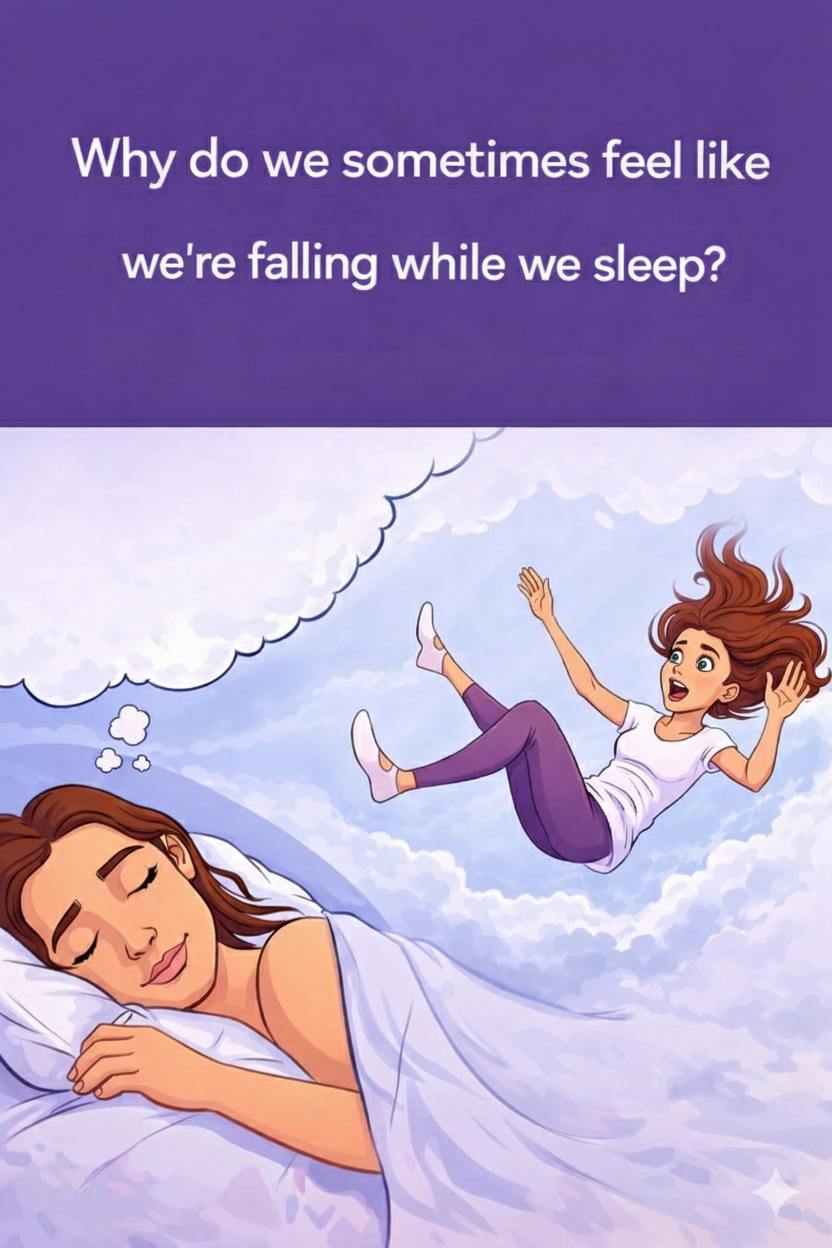
You’re just about to fall asleep. Your body feels heavy, your mind begins to drift, and suddenly—jerk! Your leg kicks, your arm twitches, or your entire body jumps as if you were falling. Your heart may race, and for a moment you’re fully awake again, confused and slightly startled.
If this has ever happened to you, you’re not alone.
In fact, this sudden body jerk while falling asleep is extremely common, and for most people, it’s completely harmless. Yet because it happens so abruptly, many people worry that something is wrong with their brain, nerves, or heart.
So what exactly is happening when your body jerks as you drift into sleep? Is it dangerous? Can stress make it worse? And should you ever be concerned?
Let’s break it down.
The Sudden Jerk That Interrupts Sleep
This experience often feels like:
Falling from a height
Tripping or losing balance
A sudden shock through the body
A brief muscle spasm
Sometimes it’s accompanied by:
A rapid heartbeat
A flash of light or dream-like image
A sense of panic
A gasp or sharp breath
Despite how intense it feels, this phenomenon has a name—and a scientific explanation.
What Is This Sleep Jerk Called?
The sudden body movement you experience while falling asleep is known as a hypnic jerk, also called:
Sleep start
Hypnagogic jerk
“Hypnic” refers to the transition between wakefulness and sleep, known as the hypnagogic state.
Hypnic jerks are involuntary muscle contractions that occur as your body relaxes and your brain shifts into sleep mode.
Up to 70% of people experience hypnic jerks at some point in their lives, making them a normal part of human sleep.
Why Does the Body Jerk While Falling Asleep?
To understand hypnic jerks, we need to look at what happens when you fall asleep.
The Transition from Wakefulness to Sleep
As you drift toward sleep:
Brain waves slow down
Muscles begin to relax
Heart rate decreases
Breathing becomes slower
This transition doesn’t always happen smoothly.
Sometimes, the brain and body fall out of sync.
The Brain’s “False Alarm” Theory
One of the most widely accepted explanations is that hypnic jerks occur due to a miscommunication between the brain and muscles.
As your muscles relax rapidly, your brain may mistakenly interpret this relaxation as:
Falling
Losing control
A threat to survival
In response, the brain sends a sudden signal to tense the muscles—causing the jerk.
This reaction is rooted in primitive survival instincts. Long ago, when humans slept in trees or unsafe environments, such reflexes may have helped prevent falls.
The Role of the Nervous System
Your nervous system plays a key role in hypnic jerks.
When you’re awake, your sympathetic nervous system (fight-or-flight mode) is active. When you sleep, the parasympathetic nervous system (rest-and-digest mode) takes over.
Hypnic jerks may occur when:
The shift between these systems happens too quickly
The nervous system is overstimulated
Stress hormones are still elevated
This sudden switch can trigger a muscle contraction.
Stress and Anxiety Make It Worse
If you’ve noticed that sleep jerks happen more often during stressful periods, that’s not a coincidence.
Stress and anxiety:
Keep the nervous system on high alert
Increase adrenaline and cortisol
Make it harder for the body to fully relax
When your mind is exhausted but your nervous system is still activated, the chances of hypnic jerks increase.
People with anxiety disorders often report more frequent sleep starts.
Caffeine and Stimulants: A Major Trigger
Caffeine is one of the most common contributors to sleep jerks.
Caffeine:
Stimulates the central nervous system
Increases alertness
Delays deep relaxation
Consuming caffeine too late in the day can confuse the brain during sleep onset, making hypnic jerks more likely.
Other stimulants include:
Nicotine
Energy drinks
Certain medications
Lack of Sleep and Irregular Sleep Schedules
Sleep deprivation increases the likelihood of hypnic jerks.
When you’re overtired:
Your body tries to fall asleep quickly
Muscle relaxation happens rapidly
The brain may react defensively
Irregular sleep schedules can also disrupt the natural sleep-wake rhythm, increasing the chances of sudden muscle movements.
Exercise and Physical Fatigue
Intense physical activity—especially late in the evening—can contribute to hypnic jerks.
While exercise is generally good for sleep, late workouts can:
Increase adrenaline
Keep muscles activated
Delay full relaxation
As your body tries to wind down, leftover muscle tension may release suddenly as a jerk.
Are Hypnic Jerks Dangerous?
For the vast majority of people, hypnic jerks are harmless.
They:
Do not damage the brain
Are not seizures
Are not a sign of neurological disease
Do not indicate heart problems
They are considered a normal sleep phenomenon.
However, understanding what they are can help reduce fear—which itself can reduce how often they occur.
Hypnic Jerks vs. Seizures: Knowing the Difference
Many people worry that sleep jerks are seizures, but there are clear differences.
Hypnic jerks:
Occur only during sleep onset
Are brief and isolated
Do not cause confusion afterward
Do not repeat rhythmically
Seizures:
Can happen at any time
Often involve repeated movements
May include loss of consciousness
Are followed by confusion or fatigue
If movements are violent, frequent, or occur during full wakefulness, medical evaluation is recommended—but typical hypnic jerks are not seizures.
Why You Sometimes Feel Like You’re Falling
The sensation of falling that often accompanies a sleep jerk is known as a hypnagogic hallucination.
As the brain enters dream mode:
Imagery can appear suddenly
Sensations may feel vivid and real
The mind blends wakefulness with dreaming
This is why the jerk often feels dramatic, even though it lasts only a second.
Does Age Affect Sleep Jerks?
Hypnic jerks can occur at any age, but they are:
More common in young adults
Often reported during stressful life phases
Sometimes more noticeable as people become more aware of their sleep
They are not a sign of aging or cognitive decline.
Can Diet Influence Sleep Jerks?
Yes, diet can play a subtle role.
Factors that may increase sleep jerks include:
High sugar intake
Heavy meals before bed
Dehydration
Low magnesium levels
Magnesium plays a role in muscle relaxation and nervous system regulation. Low levels may contribute to muscle twitching.
How to Reduce Sleep Jerks Naturally
While you may not be able to eliminate hypnic jerks entirely, you can reduce their frequency.
- Improve Sleep Hygiene
Go to bed at the same time daily
Create a calm bedtime routine
Keep your bedroom cool and dark
- Reduce Caffeine Intake
Avoid caffeine after early afternoon
Watch hidden sources like chocolate and soda
- Manage Stress
Practice deep breathing
Try meditation or gentle stretching
Limit screen time before bed
- Avoid Heavy Late-Night Meals
Eat dinner at least 2–3 hours before sleep
Avoid spicy or sugary foods at night
- Exercise Earlier in the Day
Aim for morning or afternoon workouts
Use evenings for gentle movement only
The Role of Relaxation Techniques
Relaxation techniques can help smooth the transition into sleep.
Effective methods include:
Progressive muscle relaxation
Slow breathing exercises
Guided sleep meditations
Listening to calming sounds
These practices signal to the nervous system that it’s safe to relax fully.
When Should You Be Concerned?
Although hypnic jerks are usually harmless, consult a healthcare professional if:
Jerks are extremely frequent or violent
Movements occur during full wakefulness
You experience loss of consciousness
Jerks are accompanied by pain or injury
Sleep is consistently disrupted
These signs may indicate a different sleep or neurological condition.
Other Sleep-Related Muscle Movements
Hypnic jerks are different from:
Restless leg syndrome
Periodic limb movement disorder
Night terrors
Each condition has distinct features and causes. Hypnic jerks occur only at sleep onset.
Why Understanding This Reduces Anxiety
Fear itself can increase sleep jerks.
When people worry:
The nervous system stays activated
Sleep becomes lighter
Muscle tension increases
Simply knowing that hypnic jerks are normal can reduce stress and, in turn, reduce their frequency.
A Normal Part of Being Human
For Complete Cooking STEPS Please Head On Over To Next Page Or Open button (>) and don’t forget to SHARE with your Facebook friends
ADVERTISEMENT
