
ADVERTISEMENT
What Is Black Pudding, Really?
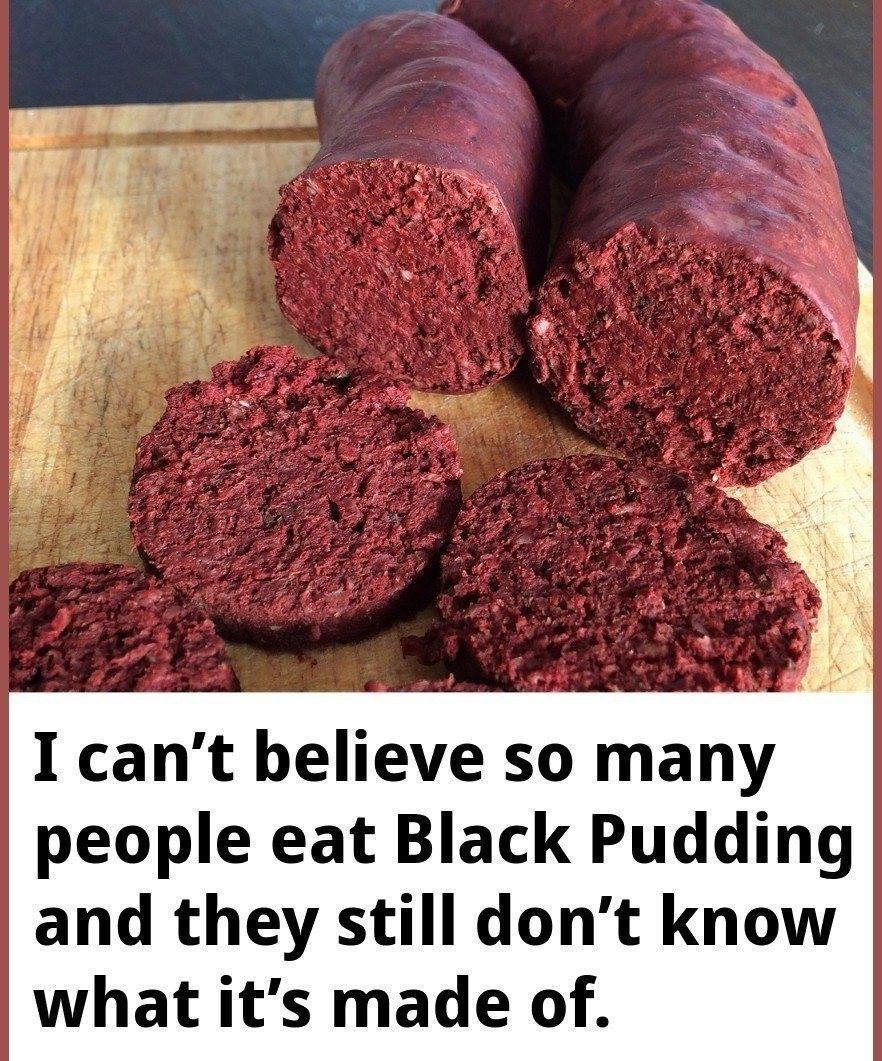
At its core, black pudding is a type of blood sausage.
Traditionally, it is made from:
Animal blood (most commonly pig’s blood)
Fat (such as suet or pork fat)
A grain or filler (oats, barley, rice, or bread)
Seasonings (salt, spices, herbs)
These ingredients are mixed together and cooked—often inside a natural casing—until set. Once cooked, black pudding can be sliced and fried, grilled, or baked.
Despite its dramatic appearance and name, black pudding is not a dessert, not a sweet pudding, and not something invented to shock. The word pudding comes from an old term meaning “stuffed” or “encased,” not the modern idea of custard or sweets.
Why Blood Became Food
To modern ears, cooking with blood can sound extreme. But for most of human history, it was logical, practical, and necessary.
Survival and Scarcity
Before refrigeration, supermarkets, and industrial farming, people lived close to the edge of survival. When an animal was slaughtered, wasting edible parts was unthinkable.
Blood:
Spoils quickly if not used
Is rich in nutrients
Is produced in large quantities during slaughter
Turning blood into food wasn’t a curiosity—it was a solution.
By mixing blood with grains, fat, and salt, early cooks could:
Preserve it longer
Stretch limited meat supplies
Create filling, high-energy meals
Black pudding was born from necessity, not novelty.
One of the Oldest Foods in Recorded History
Black pudding—or something very close to it—is ancient.
One of the earliest written references appears in Homer’s Odyssey, written over 2,700 years ago. In it, a character describes sausages made of blood and fat cooking over a fire. That description is unmistakably similar to blood sausage.
This means that humans have been making and eating foods like black pudding for millennia.
Long before:
Modern nations existed
Recipes were standardized
Food was separated from survival
Blood sausage was already part of daily life.
The Role of Black Pudding in Traditional Slaughtering
To truly understand black pudding, you have to understand the tradition of animal slaughter days.
In rural communities across Europe:
Animals were slaughtered seasonally
Entire families and villages participated
Every usable part was processed quickly
Blood was collected immediately, stirred to prevent clotting, and used the same day. Black pudding was often one of the first foods made after slaughter.
It was:
Fresh
Nutritious
Communal
Eating black pudding was part of honoring the animal by wasting nothing.
What Gives Black Pudding Its Color?
The deep, dark color of black pudding comes primarily from hemoglobin, the iron-rich protein in blood.
When blood is cooked:
Hemoglobin oxidizes
The mixture darkens
The pudding becomes nearly black
This color is natural, not artificial. There are no dyes involved. The darkness that unsettles some people is simply the visible result of iron-rich blood interacting with heat.
Ironically, that same darkness signals nutritional density.
Is Black Pudding Nutritious?
Yes—extremely.
Black pudding is one of the most nutrient-dense traditional foods still commonly eaten today.
It is rich in:
Iron (especially heme iron, which the body absorbs easily)
Protein
Zinc
Vitamin B12
Healthy fats (depending on preparation)
Historically, it was especially valuable for:
Laborers
Pregnant women
People recovering from illness
Long before supplements existed, black pudding was a natural way to prevent anemia and support energy levels.
Why Oats, Barley, or Rice?
Blood alone doesn’t make a pudding.
Grains serve several important roles:
They absorb liquid blood
They give structure and texture
They make the pudding more filling
They stretch ingredients further
In the British Isles, oats became common because they were abundant and hardy. In other regions, barley or rice filled the same role.
This adaptability is part of why black pudding exists in so many cultures.
Black Pudding Around the World
While “black pudding” is the British name, versions of this food exist almost everywhere.
United Kingdom & Ireland
Made with pig’s blood and oats
Firm texture
Often sliced and fried
A staple of the full breakfast
Spain (Morcilla)
Often includes rice or onions
Spiced with paprika
Softer texture
France (Boudin Noir)
Smooth and rich
Often served with apples
Considered a delicacy
Germany (Blutwurst)
Many regional styles
Sometimes smoked
Can be coarse or fine
Scandinavia
Often sweetened slightly
Served with lingonberries
Eaten during colder months
Different names. Same idea. Same origin.
Why the Name “Black Pudding”?
The term pudding originally referred to any mixture of ingredients encased in a skin or membrane. It had nothing to do with dessert.
The “black” simply described its color.
So “black pudding” literally means:
“A dark-colored stuffed mixture.”
Simple. Honest. Accurate.
Why Black Pudding Fell Out of Favor
If black pudding is ancient, nutritious, and widespread, why does it feel controversial today?
Industrialization of Food
Modern meat processing separates consumers from slaughter. Many people never see where food comes from, making ingredients like blood feel alien or taboo.
Cultural Shifts
As diets became more meat-centric, organs and secondary products were viewed as inferior rather than essential.
Psychological Distance
When food no longer resembles its source, realism becomes uncomfortable. Black pudding is honest—it doesn’t hide what it is.
The “Ick Factor” Explained
Discomfort with black pudding often isn’t about taste.
It’s about knowledge.
Once someone knows it contains blood, imagination takes over. But culturally, we accept:
Rare steak
Liver pâté
Bone broth
Blood simply crosses a psychological line—one created by modern detachment from food systems.
Historically, that line didn’t exist.
Is Black Pudding Safe to Eat?
Yes—when properly prepared.
Traditional black pudding:
Is cooked thoroughly
Uses fresh, controlled ingredients
Is preserved with salt and heat
Modern food safety regulations ensure commercial versions are produced under strict conditions.
Like any food, quality matters—but black pudding itself is not inherently dangerous.
Black Pudding in the Modern World
In recent years, black pudding has experienced a quiet revival.
Chefs and food historians have begun to appreciate it as:
A symbol of nose-to-tail eating
A sustainable protein source
A link to culinary heritage
It appears in:
Fine dining menus
Modern breakfast reinterpretations
Cultural food festivals
What was once dismissed is being reexamined.
Sustainability and Ethics
In an age of food waste awareness, black pudding makes sense.
Using blood:
Reduces waste
Honors the animal
Maximizes nutrition per animal slaughtered
From a sustainability standpoint, it is more ethical than discarding usable parts.
Black pudding isn’t wasteful—it’s responsible.
What Black Pudding Represents Today
More than anything, black pudding represents:
Honesty in food
Respect for tradition
A willingness to confront where food comes from
It challenges us to rethink what we consider “normal” and “acceptable.”
Should Everyone Eat Black Pudding?
Not necessarily.
Taste is personal. Culture matters. No one is obligated to like or eat it.
But understanding where black pudding comes from changes the conversation from disgust to context.
You don’t have to love it to respect it.
For Complete Cooking STEPS Please Head On Over To Next Page Or Open button (>) and don’t forget to SHARE with your Facebook friends
ADVERTISEMENT
