
ADVERTISEMENT
The Truth About Chicken Color and What It Says About Quality
What That Pink, Yellow, or White Chicken Really Means
Walk into any grocery store and head toward the meat section. At first glance, most chicken looks the same—neatly packaged, pale, and uniform. But look closer and you’ll start to notice differences. Some chicken breasts are bright white, others slightly pink. Some thighs look darker. Occasionally, you’ll see chicken with a yellow tint, grayish patches, or even faint greenish hues near the bone.
For many shoppers, these differences spark immediate concern.
Is this chicken fresh?
Is the color normal?
Does this mean it’s higher quality—or lower?
Chicken color is one of the most misunderstood aspects of food shopping. It’s often mistaken as a direct indicator of freshness, safety, or quality, when in reality, color can be influenced by many factors—some harmless, some important to understand.
This blog post breaks down what chicken color really means, what it doesn’t mean, and how to tell the difference between normal variation and genuine warning signs. By the end, you’ll never look at raw or cooked chicken the same way again.
Why Chicken Color Causes So Much Confusion
Unlike fruits or vegetables, chicken doesn’t come with obvious visual cues of ripeness or spoilage. There’s no bright red to green transition like bananas or clear mold like bread. Instead, chicken exists in a narrow color range that can shift subtly depending on conditions most people never think about.
The problem is that many consumers have been taught oversimplified rules, such as:
“Pink chicken is undercooked”
“Yellow chicken is old”
“Gray chicken is bad”
“White chicken is better”
These assumptions are often wrong—or only partially true.
Chicken color is influenced by biology, diet, processing, storage, lighting, and cooking method, not just quality or safety.
Understanding those factors is key.
The Natural Color of Raw Chicken
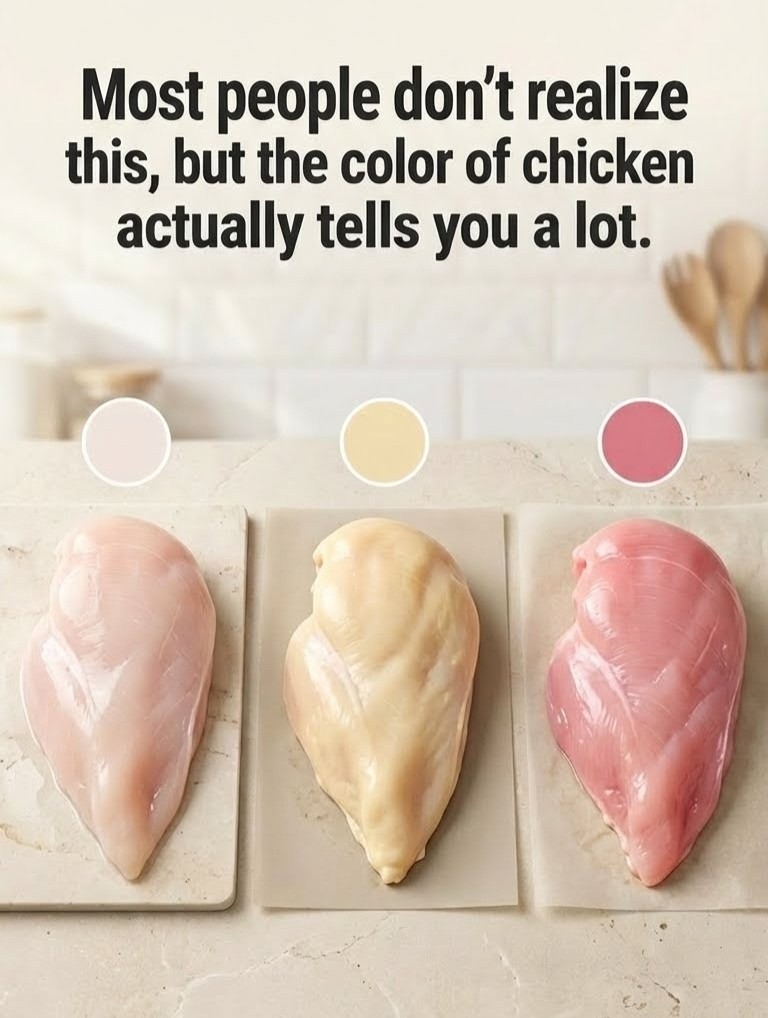
Raw chicken is not meant to be snow-white.
Fresh, raw chicken typically ranges from:
Pale pink
Light peach
Slightly translucent white
This natural pink color comes from myoglobin, a protein found in muscle tissue that stores oxygen. Chicken contains less myoglobin than red meats like beef, which is why it appears lighter—but it still has some.
Different parts of the chicken naturally vary in color:
Breast meat: Lightest, often pale pink or off-white
Thighs and drumsticks: Darker pink or reddish
Skin: White, cream, or yellow depending on diet
These variations are completely normal.
White Chicken: What It Actually Means
Many consumers associate very white chicken with cleanliness, freshness, or higher quality. While white chicken can be perfectly fine, its color alone doesn’t guarantee anything.
Extremely pale chicken can be the result of:
Low myoglobin content
Certain processing methods
Cold storage
Lighting conditions in stores
In some cases, unusually white chicken may be “woody breast” meat, a condition caused by rapid muscle growth in industrial poultry production. This can affect texture more than flavor, making the meat tougher or fibrous.
So while white chicken isn’t bad, it isn’t automatically better either.
Pink Chicken: Fresh or Dangerous?
Pink chicken is one of the most misunderstood sights in the kitchen.
Raw Pink Chicken
Raw chicken is supposed to be pink. A healthy, fresh chicken breast often has a soft pink hue. This alone does not indicate undercooking or spoilage.
Cooked Pink Chicken
Cooked chicken can sometimes remain pink near:
The bone
Thick muscle areas
Previously frozen portions
This can happen even when the chicken is fully cooked to a safe internal temperature. Chemical reactions involving myoglobin, bone marrow, and cooking methods (especially grilling or smoking) can preserve pink color.
Color alone is not a reliable indicator of doneness. Temperature is.
Yellow Chicken: Is It Better or Worse?
Yellow chicken skin often causes confusion. Some people assume it’s artificial, old, or unsafe. Others believe it’s a sign of superior quality.
The truth lies in diet.
Chickens that consume diets rich in carotenoids—such as corn, alfalfa, or marigold petals—develop yellow pigmentation in their skin and fat. This is similar to how flamingos get their pink color.
Yellow skin:
Is completely natural
Does not indicate spoilage
Does not affect safety
In many cultures, yellow-skinned chicken is actually preferred and considered more flavorful or traditional.
Gray or Dull Chicken: When to Be Concerned
While many color variations are harmless, grayish or greenish tones can be warning signs—depending on context.
Possible reasons for gray chicken include:
Oxidation due to air exposure
Extended storage
Poor packaging
Beginning stages of spoilage
Gray coloring alone doesn’t always mean chicken is unsafe, but it should prompt closer inspection.
Check for:
Sour or sulfur-like odor
Slimy texture
Sticky residue
If gray color appears alongside these signs, it’s best to discard the chicken.
Greenish or Rainbow Sheen: What’s Going On?
Sometimes chicken develops a greenish tint or an iridescent, rainbow-like sheen. This can look alarming but isn’t always dangerous.
Green Near the Bone
This often occurs in cooked chicken when bone marrow pigments seep into surrounding meat. It’s harmless if the chicken is properly cooked.
Rainbow or Oily Sheen
This is usually caused by light reflecting off muscle fibers and fat. It’s similar to how oil creates rainbow patterns on water.
These visual effects are not indicators of spoilage.
Blood Spots and Dark Patches
Small dark spots or blood clots in raw chicken can be unsettling but are usually harmless.
They result from:
Broken capillaries during processing
Normal variations in muscle tissue
While unappealing, they don’t indicate disease or contamination. Many people simply trim them off.
How Freezing Affects Chicken Color
Frozen chicken often looks different once thawed—and that’s normal.
Freezing can:
Darken meat slightly
Cause moisture loss
Create uneven coloration
Ice crystals damage muscle fibers, changing how light reflects off the meat. This doesn’t automatically mean the chicken is low quality, but it can affect texture.
Does Organic or Free-Range Chicken Look Different?
Sometimes—but not always.
Organic or free-range chickens may:
Have darker meat due to increased activity
Show more color variation
Develop yellow skin depending on diet
However, labeling alone doesn’t guarantee visual differences. Color depends more on diet and muscle use than certification.
The Role of Processing and Packaging
Modern poultry processing significantly affects appearance.
Factors include:
Air-chilled vs. water-chilled processing
Modified atmosphere packaging
Plastic wrap color
Store lighting
For example, oxygen-deprived packaging can make chicken look darker or purplish until exposed to air.
This is a packaging effect—not a quality issue.
Cooking Methods and Color Changes
How you cook chicken dramatically affects its final color.
Boiling or Poaching
Often results in pale or grayish meat
Roasting or Baking
Produces white meat with light browning
Grilling or Smoking
Can preserve pink hues due to smoke compounds
Slow Cooking
May darken meat due to extended heat exposure
Again, color does not equal safety.
For Complete Cooking STEPS Please Head On Over To Next Page Or Open button (>) and don’t forget to SHARE with your Facebook friends
ADVERTISEMENT
