
ADVERTISEMENT
Venice Looks Like It Floats — But Its Real Secret Is Underwater
At first glance, Venice feels impossible.
A city of marble palaces and stone churches rises directly from the water. Gondolas glide where streets should be. Doorsteps dip into canals. There are no cars, no highways, no visible foundations—just buildings that seem to float effortlessly on a shimmering lagoon.
Visitors often describe Venice as magical, unreal, or dreamlike. Some even assume the city is literally floating, held up by some ancient trick or natural wonder.
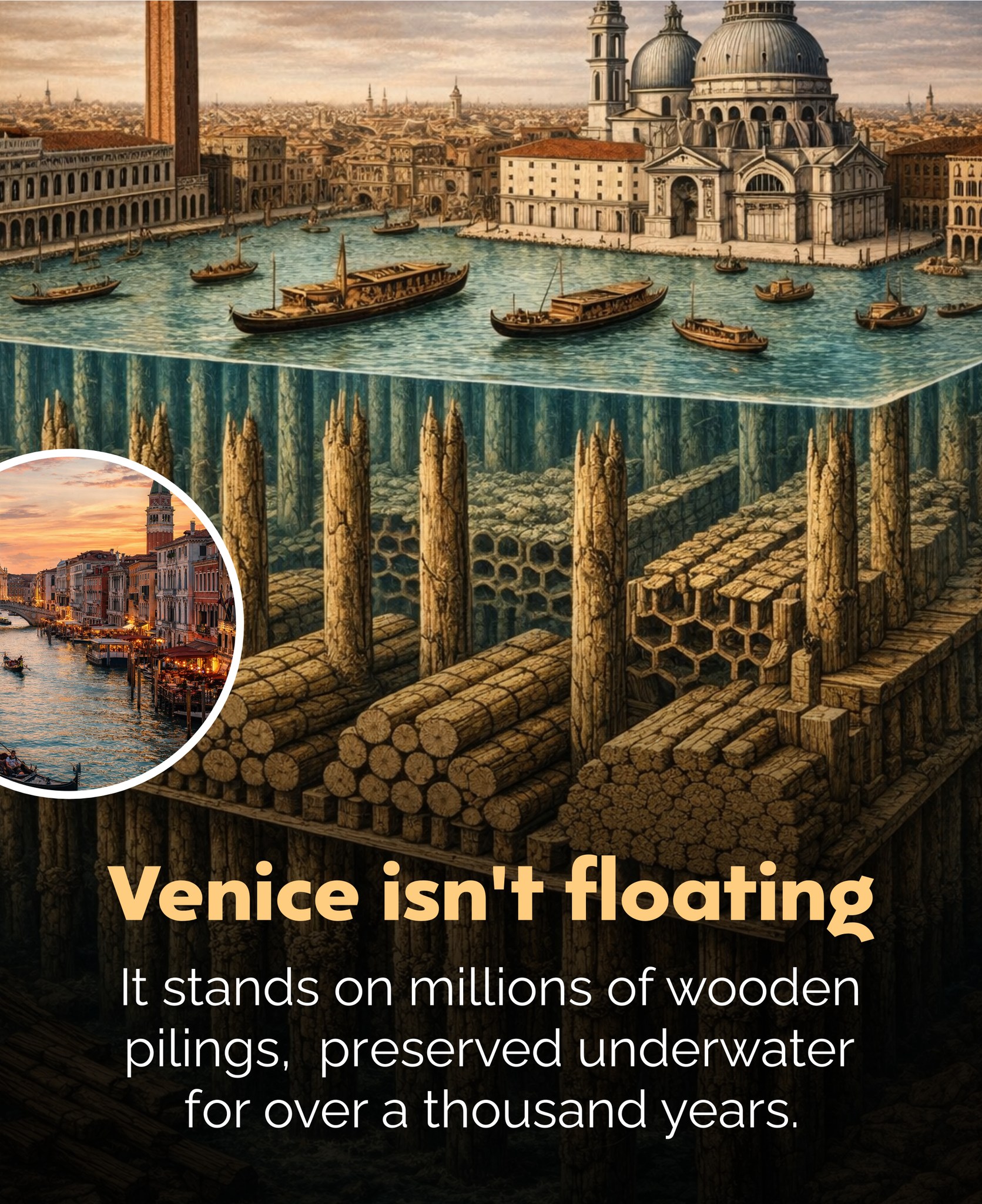
But Venice does not float.
Its true miracle lies beneath the waterline—hidden in darkness, mud, and engineering brilliance that has endured for more than a thousand years. To understand Venice, you have to look down, not up.
This is the story of how Venice was built on water, why it still stands, and why its greatest strength may also be its greatest vulnerability.
The Illusion of a Floating City
Venice’s visual magic comes from contrast. Heavy stone buildings appear weightless against water. Gothic arches and Renaissance façades rise directly from canals without visible support. Reflections blur the boundary between solid and liquid.
Unlike most cities, Venice does not reveal its foundations. In Rome, you see stone bases and layered ruins. In Paris, streets anchor buildings firmly to land. In Venice, the ground itself is water, and the boundary between earth and sea is intentionally concealed.
This illusion has fueled centuries of myths:
That Venice was built on rafts
That it rests on petrified wood
That it floats like a giant ship
The truth is more complex—and far more impressive.
ADVERTISEMENT
