
ADVERTISEMENT
Australia’s Sun Cable Project: A Historic Leap in Global Clean Energy
In an era where the urgency of climate action is matched only by human ingenuity, Australia’s Sun Cable Project, formally known as the Australia–Asia PowerLink (AAPowerLink), stands as an audacious testament to what can be achieved when ambition, innovation, and strategic vision converge. It represents a leap not just in renewable energy technology and engineering, but over geopolitical boundaries as well — promising to harness the relentless sun of Australia’s Northern Territory and deliver clean electricity across thousands of kilometers to power cities in Asia.
This blog post unpacks the full story: what the Sun Cable Project is, why it matters, how it works, the challenges it faces, the opportunities it creates, and what it could mean for the future of global clean energy. By the time you finish reading, you’ll understand why this project, if realized, could be one of the most transformative clean‑energy efforts of the 21st century.
1. A Vision Born from Abundant Sunshine
Australia is a land blessed by sunshine. Vast expanses of desert and outback receive some of the highest solar irradiance in the world — a natural advantage that, until recently, went largely untapped on a continental scale. The Sun Cable Project was born from the idea that Australia could leverage this natural wealth not merely for domestic power generation but as an export commodity, competing on the global stage much like traditional miners and exporters of commodities such as iron ore and coal.
At its core, this multi‑billion‑dollar initiative aims to create a network of renewable energy infrastructure centred in Australia’s Northern Territory that would capture solar energy, store it in massive batteries, and then transmit it via high voltage direct current (HVDC) lines — both overhead and undersea — to markets abroad.
The project gained global attention because of its sheer scale:
- A proposed solar farm with capacity in the tens of gigawatts,
- The world’s largest utility‑scale battery storage system, and
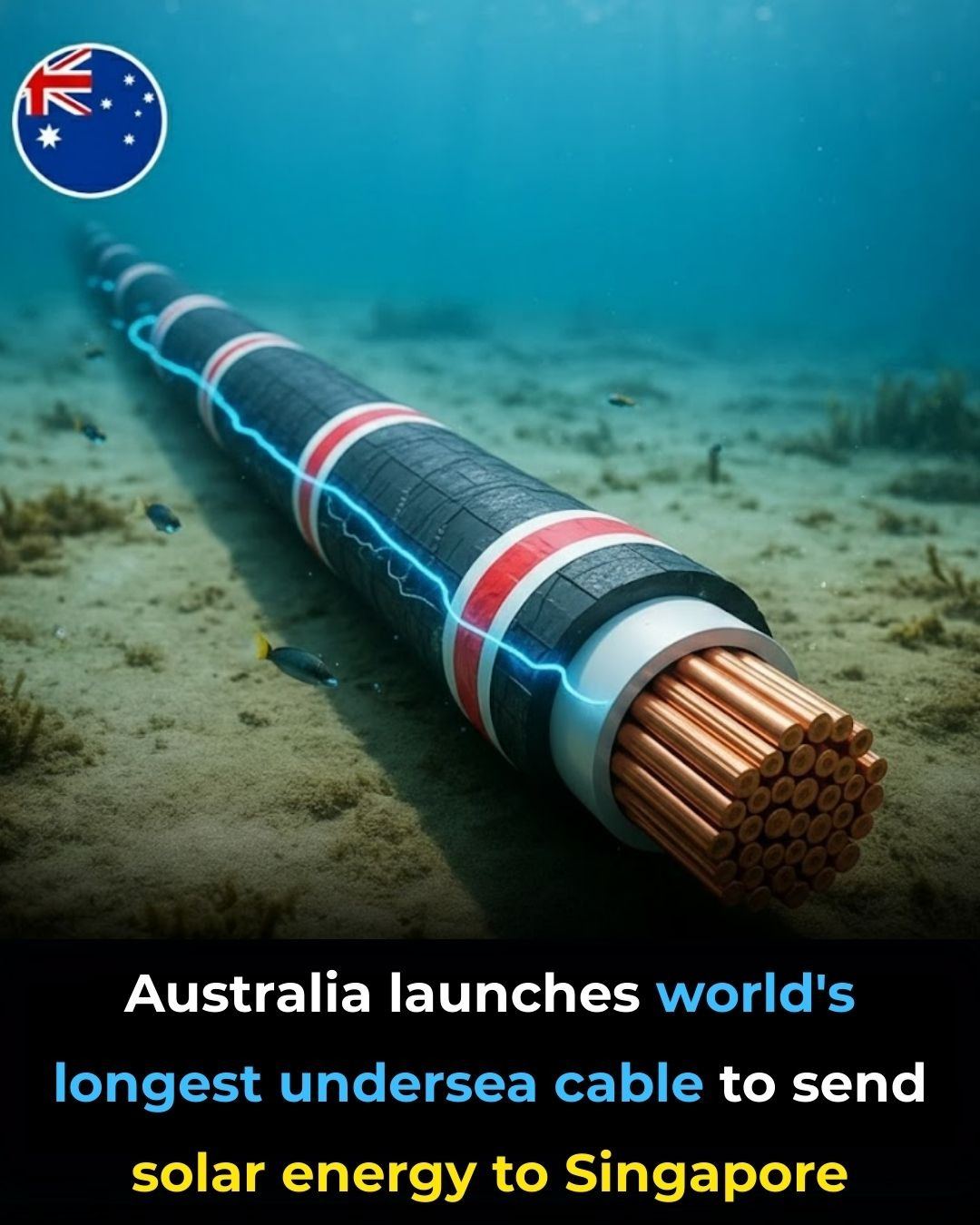
- An undersea power transmission cable stretching over 4,200 kilometers, making it potentially the longest subsea HVDC power connection ever built.
This infrastructure would collectively form the Australia‑Asia PowerLink — a literal and figurative power bridge between continents.
2. Breaking Down the Project: How It Works
To truly appreciate the Sun Cable Project’s significance, we need to understand the engineering and logistics that make it unique.
Solar Generation in the Heart of Australia
The project proposes a colossal solar farm in the Barkly Region of the Northern Territory, near places like Powell Creek and Elliott. In its most ambitious iterations, the solar infrastructure could reach up to around 20 gigawatts of peak capacity, dwarfing most solar installations globally.
With uninterrupted sunlight and ample land, this region is ideal for large‑scale solar arrays. The energy captured here will be converted into electricity that can be either used immediately or stored for later.
Battery Storage: Taming Intermittency
One of the biggest challenges in renewable energy is intermittency — the sun doesn’t always shine, and the wind doesn’t always blow. To ensure that electricity supply is steady and reliable, the Sun Cable Project incorporates an enormous battery storage system — expected to be up to 36–42 GWh in capacity — that would be among the largest batteries in the world.
These batteries act as a buffer, storing excess energy generated during peak sun hours and releasing it when needed, supporting a constant flow of clean power.
Transmission Infrastructure: HVDC from Land to Sea
Once generated and stored, electricity must travel across vast distances:
- Overhead HVDC Transmission: First, a high‑voltage direct current (HVDC) line would carry power from the solar farm to Darwin, approximately 800 km away.
- Subsea HVDC Cable: From Darwin, another HVDC system — this time beneath the sea — would carry renewable electricity over more than 4,000 km to Singapore.
HVDC is preferred for long‑distance transmission because it incurs lower energy losses than traditional alternating current (AC) systems over such vast spans.
Converters and Interfaces
At both endpoints — Darwin and Singapore — voltage source converters (VSCs) are needed to convert between AC (used in local grids) and DC (used for the long‑distance links), ensuring compatibility with existing electricity systems.
3. Strategic Importance: Local and Global Impacts
Sun Cable isn’t simply an engineering marvel — its implications ripple through economics, geopolitics, and climate policy.
Economic Impact for Australia
The project is expected to inject tens of billions into Australia’s economy — from construction jobs and industrial development to long‑term energy pricing benefits. In the Northern Territory alone, Sun Cable has been described as a catalyst for industrial electrification, potentially powering emerging green industries such as hydrogen production, advanced manufacturing, and data centres.
Annual solar energy exports could be valued at around AUD 2 billion, offering a new revenue stream and diversifying Australia’s export portfolio beyond minerals and fossil fuels.
Advancing Singapore’s Clean Energy Goals
Singapore is a densely populated island nation with limited space for large‑scale renewable generation. Exported electricity from Australia could supply a significant portion of Singapore’s power needs — estimates suggest up to about 9–15 per cent of the city‑state’s electricity consumption could be met by imported Australian solar energy.
Singapore’s government has even granted conditional approval recognizing the project’s technical and commercial viability, contingent on achieving commercially acceptable pricing and securing long‑term purchase agreements.
Supplying clean electricity across international borders positions Sun Cable as a forerunner of transnational renewable energy trade, potentially reshaping how countries think about energy sovereignty and climate action.
Climate and Sustainability Benefits
The renewable electricity exported would significantly reduce greenhouse gas emissions compared with fossil fuel‑based energy sources — both in Australia and Singapore. Estimates suggest Singapore’s emissions could decrease by millions of tonnes annually once the link is operational.
These reductions align with global climate commitments and demonstrate how international cooperation can accelerate decarbonization.
4. Challenges and Controversies: A Rocky Path Ahead
No project of this scale would be without obstacles, and Sun Cable has faced both technical challenges and shifts in its development journey.
Corporate Turbulence and Financial Struggles
In early 2023, Sun Cable entered voluntary administration after disagreements between major investors — tech entrepreneur Mike Cannon‑Brookes and mining magnate Andrew “Twiggy” Forrest — over funding and commercial strategy.
The administration process reflected deep concerns over the project’s capital intensity and the commercial viability of exporting power across such distances. Estimates for just the undersea cable alone ran into tens of billions in costs.
However, the project was later acquired by a consortium led by Grok Ventures (Cannon‑Brookes’ company), giving it new momentum with revised plans and timelines.
Engineering, Environmental, and Regulatory Hurdles
Building the world’s longest subsea HVDC cable is unprecedented, presenting intricate engineering challenges. Routing the cable through territorial waters — potentially including those of Indonesia — adds diplomatic and regulatory complexity that must be carefully managed.
Environmental and indigenous land‑use considerations are also significant, requiring ongoing consultation and assessment during planning and approvals.
Commercial Viability and Market Uncertainty
Securing long‑term contracts with buyers in Singapore and demonstrating competitive pricing are key conditions for the project’s success. While Singapore’s Energy Market Authority has signaled conditional support, further steps are needed to finalize agreements and make the project financially sound.
For Complete Cooking STEPS Please Head On Over To Next Page Or Open button (>) and don’t forget to SHARE with your Facebook friends
ADVERTISEMENT
