
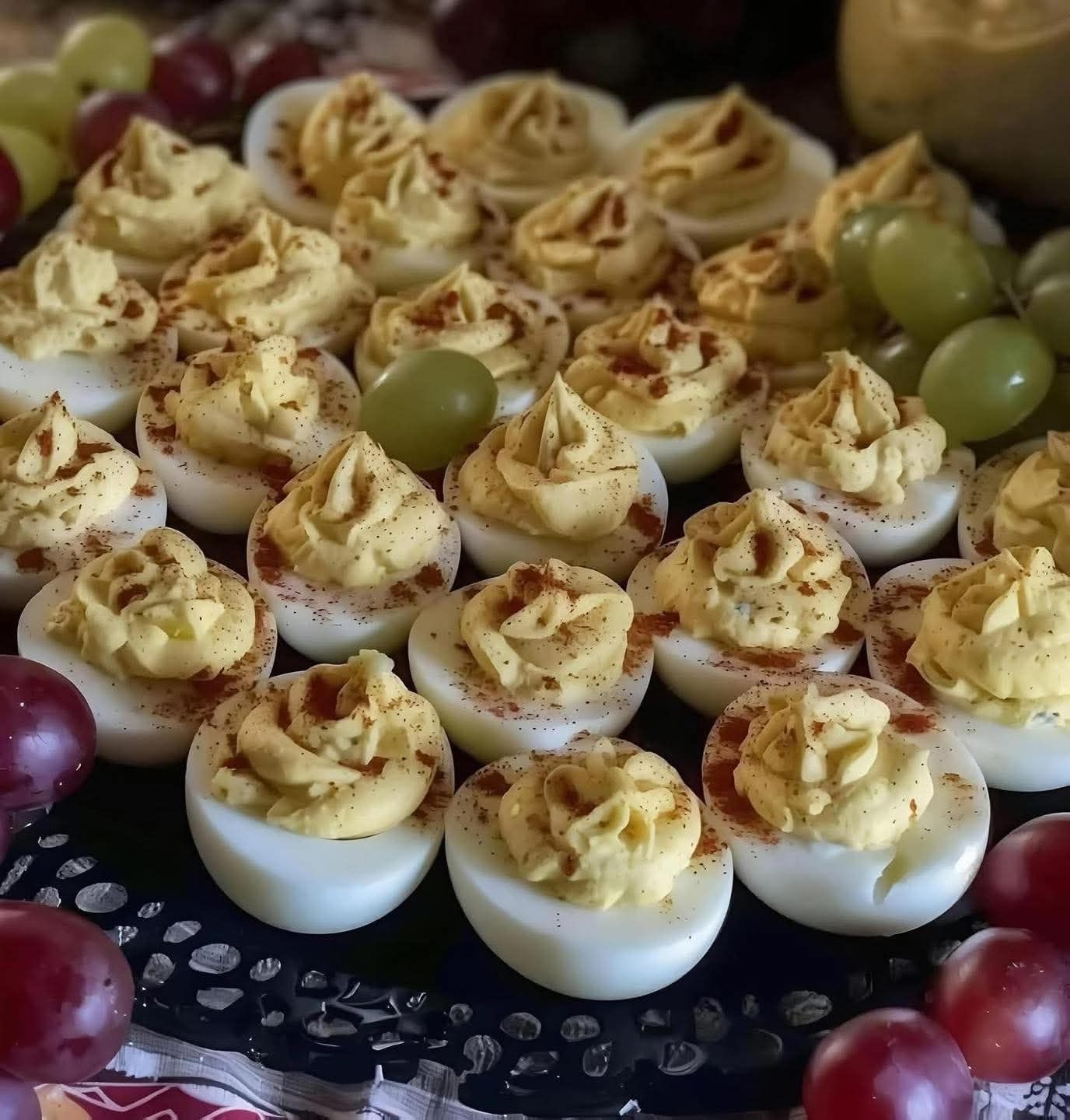
ADVERTISEMENT
Does Anyone Here Actually Still Eat Deviled Eggs?
Let’s ask the question that’s quietly floated around potlucks, holidays, and family gatherings for years but rarely said out loud:
Does anyone here actually still eat deviled eggs?
Not “Have you ever eaten one?”
Not “Do you tolerate one to be polite?”
But genuinely—are deviled eggs still a food people actively choose, crave, and enjoy?
Because if you’ve ever stood at a buffet table watching a perfectly arranged tray of deviled eggs slowly warm under fluorescent lights while everyone walks past it twice, you know exactly why this question exists.
Deviled eggs occupy a strange space in modern food culture. They’re iconic. They’re nostalgic. They’re deeply rooted in family traditions. And yet… they’re also often the last thing left on the table, slightly sweaty, smelling faintly of mustard and regret.
So what’s the deal?
Are deviled eggs a beloved classic that refuses to die—or are they simply coasting on tradition, surviving purely because no one has officially declared them obsolete?
Let’s unpack it.
A Brief History of the Deviled Egg (Yes, It Goes Way Back)
Before we judge deviled eggs too harshly, we should understand where they came from.
The concept of “deviling” food dates back to the 18th century, where the term referred to adding spicy or zesty ingredients—think mustard, pepper, paprika, vinegar. It didn’t mean “evil”; it meant bold.
Eggs stuffed with seasoned yolks became popular in Europe and eventually crossed the Atlantic, landing squarely in American kitchens by the early 20th century. By the 1950s and 60s, deviled eggs were peak sophistication.
They were:
Fancy but affordable
Protein-rich but not heavy
Portable and make-ahead friendly
In other words, they were perfect for church picnics, backyard barbecues, holiday dinners, and potlucks.
For decades, deviled eggs weren’t just food—they were a social obligation.
The Golden Age: When Deviled Eggs Ruled the Table
There was a time when deviled eggs were not optional.
If you showed up to:
Easter dinner
Thanksgiving
Christmas
A baby shower
A funeral luncheon
A neighborhood cookout
…and there were no deviled eggs, people noticed.
They symbolized effort. Someone had to boil the eggs just right, peel them without destroying the whites, mix the filling, pipe or spoon it neatly, sprinkle paprika with intention. These were not lazy snacks.
They were a badge of hospitality.
And let’s be honest: when done well, deviled eggs were actually really good.
Creamy. Tangy. Salty. Soft with just enough bite. Balanced.
So what changed?
The Modern Reality: The Tray That No One Touches
Fast-forward to today.
The same tray appears at gatherings—but now something is different.
People glance at it.
They nod politely.
They move on.
Why?
- Food Culture Has Shifted
We live in a world of:
Global flavors
Trend-driven food
Instagram-worthy aesthetics
Health-conscious eating
Against sushi rolls, charcuterie boards, sliders, street tacos, and gourmet dips, deviled eggs can feel… outdated.
They don’t photograph well.
They don’t feel exciting.
They don’t scream “modern.”
They scream “Aunt Linda brought these.”
- The Smell Factor
Let’s be honest.
Eggs have a smell.
Boiled eggs have a stronger smell.
Deviled eggs—served cold, sitting out, sometimes sweating—can be… aggressive.
Not bad, necessarily, but unmistakable.
In a room full of food, smell matters more than we admit. And deviled eggs announce themselves immediately.
- Texture Is a Commitment
Deviled eggs are soft.
Very soft.
There’s no crunch unless someone added bacon or celery. It’s a mouthful of creamy, eggy paste wrapped in more egg.
For some people, that texture is comforting.
For others, it’s a dealbreaker.
- They’re Weirdly Polarizing
No one says, “Deviled eggs are fine.”
People either:
Love them and really love them
Or politely avoid them forever
There’s rarely a neutral stance.
The Social Pressure Egg
Here’s the thing: even people who like deviled eggs often don’t admit it publicly.
Why?
Because deviled eggs are associated with:
Old-school cooking
Midwestern potlucks
Church basements
Family reunions with paper plates
Liking them feels… uncool.
So someone will say:
“I don’t really eat deviled eggs…”
And then quietly take three when no one is looking.
Who Is Still Eating Deviled Eggs?
Despite the skepticism, yes—people still eat deviled eggs.
But the audience has shifted.
- Nostalgia Lovers
For many, deviled eggs taste like:
Childhood holidays
Grandma’s kitchen
Simpler times
That emotional connection is powerful. Food memory is real, and deviled eggs trigger it instantly.
- The Devoted Few
Some people genuinely love deviled eggs and do not care what anyone thinks.
They will:
Make them for themselves
Request them specifically
Defend them passionately
These people are loyal. And frankly, brave.
- The “Only These Ones” Crowd
You know this group.
“I don’t usually like deviled eggs, but these are good.”
Translation:
Less mayo
More mustard
Bacon
Spice
Fresh herbs
In other words, not the traditional ones.
The Problem Isn’t Deviled Eggs—It’s Bad Deviled Eggs
Here’s the uncomfortable truth:
A lot of deviled eggs are just… not good.
Too much mayo.
Not enough seasoning.
Rubbery whites.
Dry filling.
Paprika doing absolutely nothing.
When deviled eggs are bad, they’re really bad.
And because people keep making them the same way they did in 1978, the dish never evolves.
The Reinvention Era: Are Deviled Eggs Trying to Make a Comeback?
In recent years, chefs and food bloggers have tried to resurrect deviled eggs by reinventing them.
You’ll see versions with:
Avocado
Sriracha
For Complete Cooking STEPS Please Head On Over To Next Page Or Open button (>) and don’t forget to SHARE with your Facebook friends
ADVERTISEMENT
