
ADVERTISEMENT
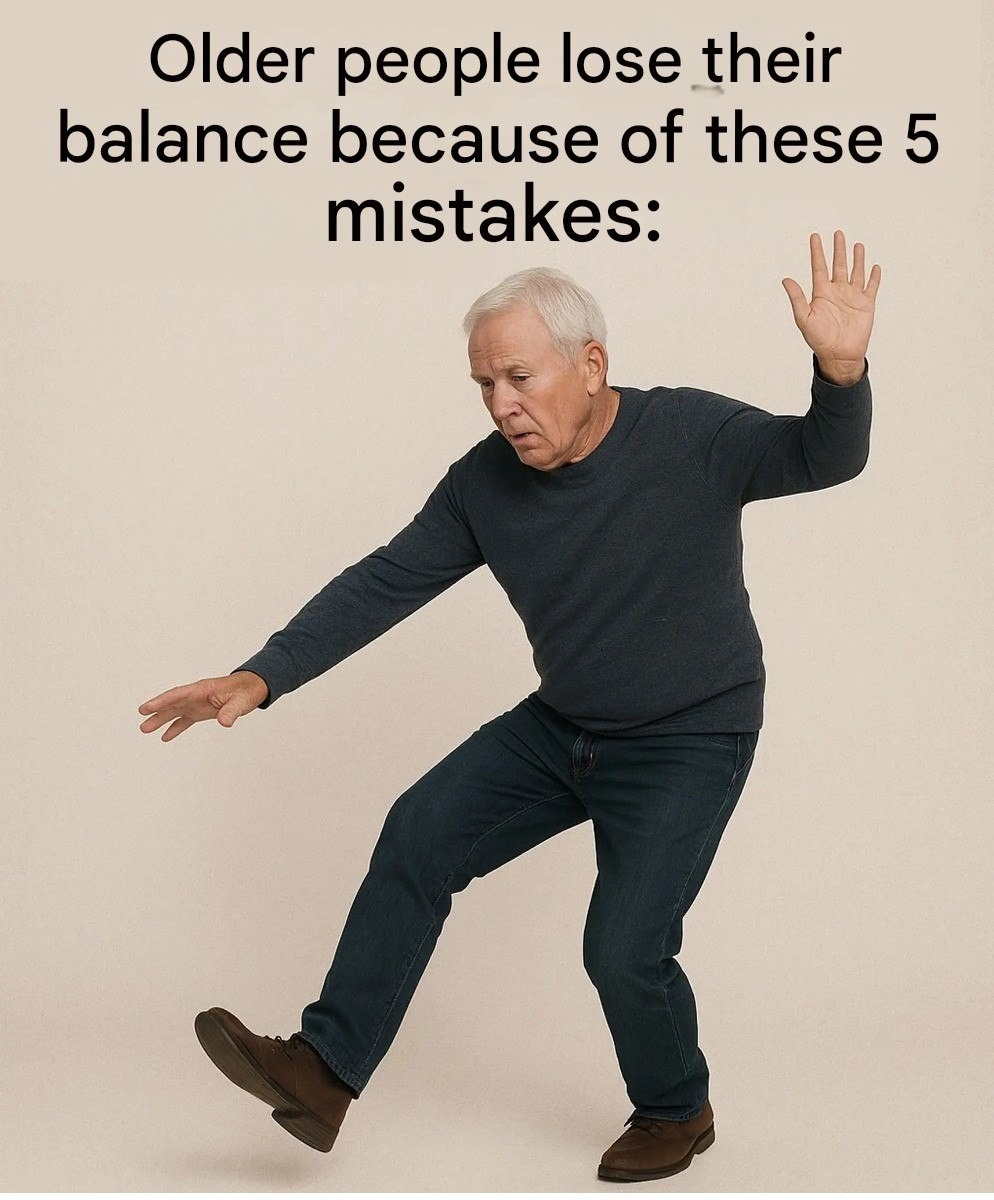
The Steady Stride: 5 Common Mistakes That Steal Your Balance and How to Fix Them
Balance is something most of us take for granted—until it starts to slip.
One day you’re walking confidently down the street, climbing stairs without thinking, turning quickly when someone calls your name. Then, almost without warning, you feel it: a moment of wobble, a hesitation, a subtle sense that your body didn’t respond the way you expected.
Loss of balance rarely arrives all at once. It creeps in quietly, disguised as stiffness, fatigue, poor posture, or “just getting older.” But the truth is this:
Balance is not just a natural gift—it’s a skill. And like any skill, it can weaken or strengthen depending on how you use it.
In this article, we’ll explore five common mistakes that quietly steal your balance, why they happen, and—most importantly—how to fix them with practical, realistic strategies you can start today.
Whether you’re young, aging, athletic, or simply trying to move through life with more confidence, understanding balance can transform how you walk, stand, exercise, and live.
What Balance Really Is (And Why It’s More Than “Not Falling”)
When people think of balance, they often imagine standing on one foot or walking a straight line. But balance is far more complex—and far more fascinating.
Your balance depends on the seamless cooperation of several systems:
Muscles and joints (especially in the feet, ankles, hips, and core)
Vision, which helps orient you in space
The inner ear (vestibular system), which senses movement and position
Proprioception, your body’s internal awareness of where it is without looking
The nervous system, which integrates all this information and reacts instantly
When one of these systems is neglected or disrupted, balance suffers.
And most balance problems don’t come from dramatic injuries—they come from small, repeated mistakes we don’t even realize we’re making.
Mistake #1: Ignoring Foot Strength and Mobility
Why Your Feet Matter More Than You Think
Your feet are your foundation. They contain:
26 bones
33 joints
Over 100 muscles, tendons, and ligaments
Yet most of us treat them like passive blocks at the bottom of our bodies, squeezing them into rigid shoes and rarely moving them intentionally.
Weak, stiff feet reduce sensory feedback to the brain, making it harder for your body to adjust quickly when you lose stability.
Signs This Mistake Is Stealing Your Balance
You feel unstable on uneven ground
Your ankles roll easily
You avoid walking barefoot
You rely heavily on supportive shoes
You feel wobbly when standing still
How to Fix It
- Wake Up Your Feet
Spend a few minutes each day barefoot (when safe), gently spreading your toes, rolling your feet on a ball, or scrunching a towel with your toes. - Strengthen the Ankles
Simple exercises like heel raises, toe raises, and ankle circles improve stability and responsiveness. - Improve Foot Awareness
Try standing barefoot and shifting your weight slowly from heel to toe and side to side. This retrains your brain to sense subtle changes.
Strong, responsive feet act like shock absorbers and stabilizers, dramatically improving balance from the ground up.
Mistake #2: Poor Posture and Collapsed Alignment
The Hidden Balance Thief
Modern life encourages poor posture:
Long hours sitting
Looking down at phones
Slouching at desks
Weak core muscles
When your posture collapses, your center of gravity shifts forward or backward, forcing your muscles to constantly compensate.
Balance becomes harder—not because you’re weak, but because your body is misaligned.
Signs This Mistake Is Affecting You
Rounded shoulders
Forward head posture
Lower back discomfort
Tight hips
Feeling off-balance when standing still
How to Fix It
- Rebuild Neutral Alignment
Imagine a straight line running from your ears through your shoulders, hips, knees, and ankles. This is your balanced posture. - Strengthen the Core
Balance doesn’t come from “six-pack abs.” It comes from deep stabilizing muscles that support your spine.
Simple exercises like:
Standing marches
Gentle planks
Bird-dogs
can dramatically improve postural stability.
- Practice Posture Awareness
Several times a day, pause and reset:
Feet grounded
Chest open
Shoulders relaxed
Head stacked over spine
Good posture reduces unnecessary strain and allows your balance systems to work efficiently.
Mistake #3: Relying Too Much on Vision
When Your Eyes Do All the Work
Vision is a powerful balance tool—but overreliance on it can weaken other systems.
If you always watch the ground, fix your gaze, or depend on visual cues, your inner ear and proprioception don’t get challenged.
The result? Balance that works only when conditions are perfect.
Signs of Overreliance on Vision
Feeling unsteady in the dark
Difficulty balancing with eyes closed
Trouble on uneven or unfamiliar surfaces
Increased dizziness when visual cues change
How to Fix It
- Practice Eyes-Closed Balance
In a safe environment, stand near a wall or chair and try gentle balance exercises with your eyes closed.
Even 10–20 seconds at a time strengthens non-visual balance systems.
- Change Visual Inputs
Practice balance while:
Turning your head
Looking up or down
Focusing on moving objects
This trains your brain to integrate information from multiple sources.
- Improve Vestibular Health
Slow head movements, gentle rotations, and controlled transitions (like standing up slowly) support inner ear balance.
True balance is adaptable—it doesn’t collapse when vision is limited.
Mistake #4: Moving Too Little—or Too Repetitively
The Balance Paradox
Many people lose balance not because they move too much, but because they move too little—or always in the same way.
The body thrives on variety. When movement patterns become limited, certain muscles weaken while others overwork.
Balance depends on adaptability.
Signs This Mistake Is Stealing Your Stability
Stiffness
Fear of movement
Difficulty changing direction
Hesitation on stairs
Reduced confidence in daily tasks
How to Fix It
- Introduce Movement Variety
Incorporate different types of movement:
Walking at different speeds
Side steps
Gentle turns
Backward walking (carefully)
- Practice Transitional Movements
Balance challenges often happen during transitions:
Sitting to standing
Turning quickly
Stepping over objects
Practice these movements slowly and intentionally.
- Build Confidence Gradually
Avoiding movement leads to more instability. Start small and increase challenge safely.
Balance improves when your body learns to respond to new situations, not when it avoids them.
Mistake #5: Ignoring the Role of the Nervous System
Balance Is Not Just Physical
Balance is as much neurological as it is muscular.
Stress, fatigue, anxiety, and poor sleep all affect:
Reaction time
Muscle coordination
Sensory processing
When your nervous system is overwhelmed, balance suffers—even if your muscles are strong.
Signs This Mistake Is at Play
Feeling clumsy when tired
Balance worsening under stress
Increased falls during illness
Delayed reactions
How to Fix It
- Prioritize Sleep
Sleep is when the nervous system resets. Chronic sleep deprivation directly affects coordination and balance. - Manage Stress
Simple breathing techniques, mindfulness, and regular breaks calm the nervous system and improve body awareness. - Slow Down
Balance improves when movements are intentional. Rushing increases errors.
A calm nervous system responds faster and more accurately than a stressed one.
Why Balance Declines With Age—And Why It Doesn’t Have To
It’s true that balance challenges become more common with age—but not because balance is destined to fail.
The real reasons include:
Muscle loss from inactivity
Reduced joint mobility
Less sensory stimulation
Fear of falling leading to avoidance
The encouraging truth?
Balance can improve at any age.
Studies consistently show that targeted balance training reduces falls, improves confidence, and enhances quality of life—even in older adults.
Simple Daily Habits That Protect Your Balance
You don’t need hours of exercise or special equipment.
Try incorporating these habits:
Stand on one foot while brushing your teeth
Walk barefoot at home when safe
Change directions frequently when walking
Sit less, move more
Pay attention to how your body feels in space
Small challenges build big resilience.
When to Seek Professional Help
While most balance issues improve with practice, seek medical advice if you experience:
Sudden or severe dizziness
For Complete Cooking STEPS Please Head On Over To Next Page Or Open button (>) and don’t forget to SHARE with your Facebook friends
ADVERTISEMENT
