
ADVERTISEMENT
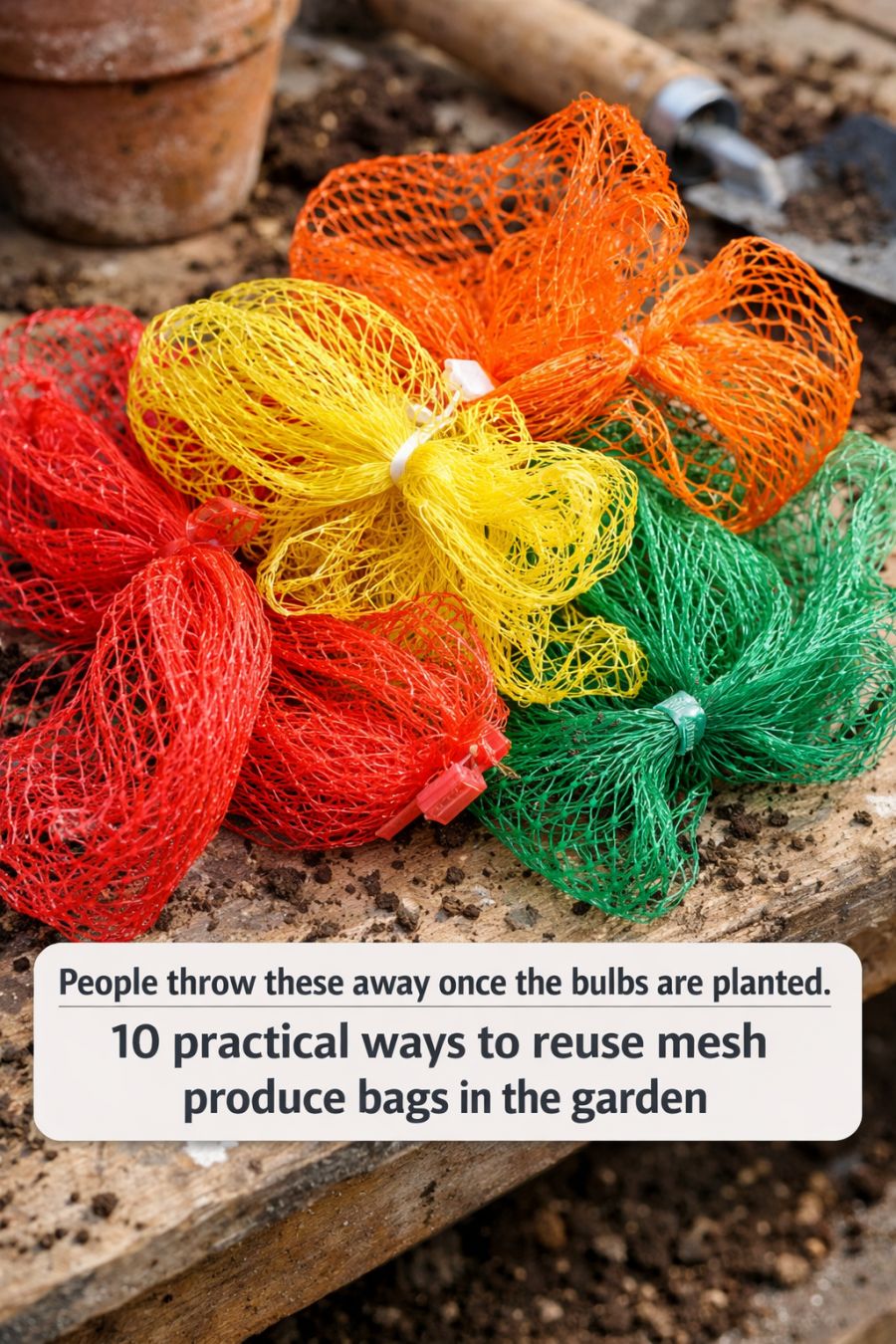
Here’s what I do: I gently clean the bulbs, remove excess dirt, and place them loosely in a mesh bag. I hang the bag in a cool, dry place—preferably a basement or garage with good air circulation. Over time, I found that the mesh keeps the bulbs from clumping together and encourages even airflow, which dramatically extends their shelf life. Plus, the bags are reusable year after year if kept clean and dry.
2. Seedling Protection from Pests
When seedlings are young, they’re highly vulnerable to pests such as birds, squirrels, or even curious neighborhood cats. A mesh produce bag can act as a lightweight protective barrier.
Simply cut the bag open, spread it over the seedlings, and anchor it at the base with soil or small stakes. Unlike heavier fabrics or plastic covers, mesh allows sunlight and rain to penetrate, while keeping small pests at bay. I used this method with my tomato seedlings last spring, and the difference was remarkable—no nibbling, and the seedlings thrived.
3. DIY Garden Sacks for Harvesting
Harvesting root vegetables like carrots, potatoes, or onions can be messy. Mesh produce bags make excellent DIY harvest sacks because they are sturdy, breathable, and easy to carry.
I usually keep a few bags handy in the garden shed. When I pull carrots from the soil, I gently brush off the excess dirt and toss them directly into a mesh bag. The airflow prevents moisture buildup and reduces the risk of molding, and the bag’s transparency makes it easy to see what’s inside. By the end of the season, you have a collection of vegetables ready to store or cook, all while reusing what would otherwise be trash.
ADVERTISEMENT
