
ADVERTISEMENT
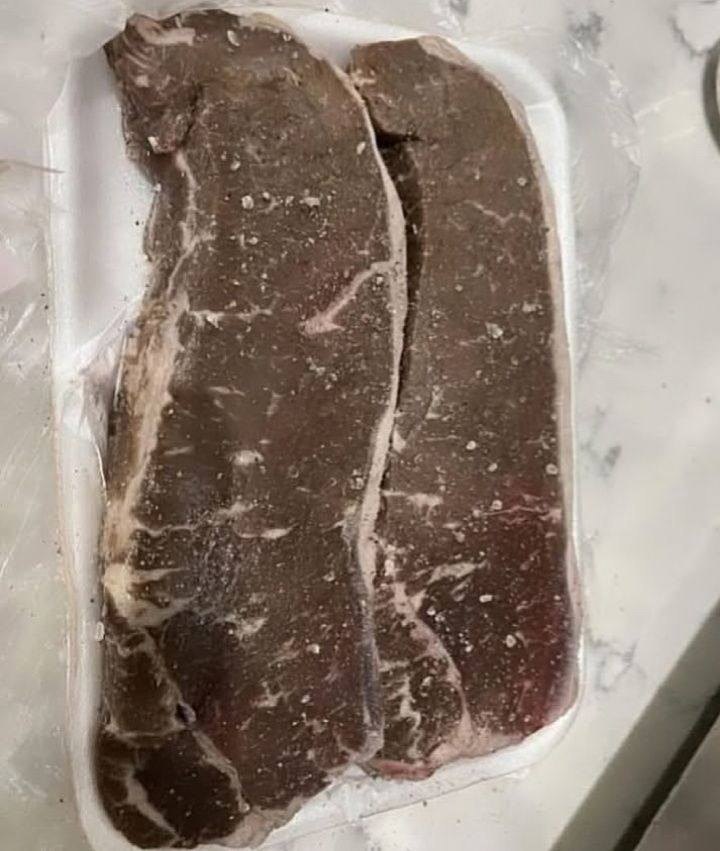
When the Steak Says “Expired Today”: A Personal and Practical Guide
It’s a familiar moment.
You open the refrigerator with dinner in mind, already tasting the steak in your head—how you’ll season it, how hot the pan will be, how it’ll smell as it sears. Then you notice the label.
“Use by: Today.”
Suddenly, confidence turns into hesitation.
Is it still safe?
Is “expired today” the same as “expired yesterday”?
Is this a hard rule—or more of a suggestion?
You stand there longer than you expected, staring at a piece of meat like it might start talking back.
This guide is for that moment.
Not just the technical answer, but the human one—grounded in food safety, common sense, and the reality of how people actually live and cook.
- What “Expired Today” Really Means
First, let’s clear up a major misconception.
Most dates on meat packages are not expiration dates in the strict sense. They are usually one of the following:
“Use by” – A quality and safety guideline, especially important for perishables
“Best before” – A quality indicator, not a safety cutoff
“Sell by” – For retailers, not consumers
When a steak says “Use by: Today,” it means the manufacturer expects the meat to be at its best quality and safety up until the end of that day, assuming proper refrigeration.
It does not mean:
It becomes dangerous at midnight
It instantly spoils the moment the clock changes
It must be thrown out automatically
But—and this matters—it does mean today is the point where you need to be attentive.
- The Three Questions That Matter More Than the Date
Before you decide anything, ask yourself these three questions. They matter more than the label.
- Has it been stored properly?
Refrigerator at or below 40°F (4°C)?
Steak kept sealed or tightly wrapped?
Not left out at room temperature?
If the answer is yes, you’re starting from a good place.
- What does it smell like?
Fresh steak smells:
Neutral
Slightly metallic or “iron-like”
Clean
Bad steak smells:
Sour
Rotten
Like ammonia or sulfur
If the smell makes you recoil, that’s your answer.
- What does it look and feel like?
Fresh steak:
Red or slightly darkened (vacuum-sealed meat can be purplish)
Moist but not slimy
Concerning signs:
Green or gray patches
Sticky or slimy texture
Excessive liquid with a foul odor
Your senses are powerful tools. Trust them.
- Why the Date Still Matters (Even If It’s Not Absolute)
It’s tempting to dismiss date labels as overly cautious—and sometimes they are. But they exist for a reason.
The date accounts for:
Bacterial growth over time
Typical home refrigeration conditions
Average consumer handling
Even if the steak seems “fine,” bacteria don’t announce themselves loudly. Some dangerous pathogens don’t change smell or appearance.
That’s why “expired today” is a decision point, not a green light to ignore caution entirely.
- Cooking Tonight vs. Saving It for Later
Here’s a key rule:
If the steak says “Use by: Today,” today is the last day you should cook it—not the day to postpone.
Cooking it today
✔ Generally safe if:
Properly stored
Smells normal
Looks normal
Cooked thoroughly (or to a safe internal temperature)
Saving it for tomorrow
✘ Risky unless:
You freeze it today
It hasn’t already been near the edge of spoilage
Freezing pauses bacterial growth. Refrigeration only slows it.
If you’re unsure and don’t plan to cook it today, freezing is the safest option.
- A Personal Rule of Thumb
Many experienced home cooks follow a simple internal rule:
“If I have to argue with myself about it, I probably shouldn’t eat it.”
Food should make you feel nourished—not anxious.
If the steak:
Smells okay
Looks okay
Was handled well
and you’re comfortable cooking it today, go ahead.
If you feel uneasy, that unease is worth listening to.
- How Cooking Method Changes the Equation
Not all cooking methods carry the same level of risk.
Lower risk methods
Well-done cooking
Braising
Stewing
Slow cooking to safe internal temperatures
Higher risk methods
Rare or blue steak
Quick searing without thorough cooking
Sous vide without proper temperature control
If the steak is right at its date limit, cooking it thoroughly is the safer choice.
- The Cost of Waste vs. the Cost of Illness
This is where many people get stuck.
No one likes wasting food—especially expensive cuts of meat. But food poisoning costs more than money:
Missed work
Physical discomfort
Dehydration
Medical bills
Stress
A steak can be replaced. Your health shouldn’t be gambled.
When in doubt, err on the side of safety, not guilt.
- Why We Overthink This Moment
Interestingly, this isn’t just about food.
The hesitation around an “expired today” steak reflects a deeper tension:
Trusting systems vs. trusting ourselves
Fear of waste vs. fear of harm
Rules vs. judgment
We want certainty—but food safety lives in probabilities, not absolutes.
Learning to combine information with intuition is part of becoming a confident cook.
- Practical Decision Guide (Quick Reference)
Cook it today if:
Stored properly
Smells neutral
Looks normal
You’ll cook it thoroughly
Freeze it today if:
You can’t cook it
It still seems fresh
Packaging is intact
Throw it out if:
For Complete Cooking STEPS Please Head On Over To Next Page Or Open button (>) and don’t forget to SHARE with your Facebook friends
ADVERTISEMENT
