
ADVERTISEMENT
Stone That Floats (Almost)
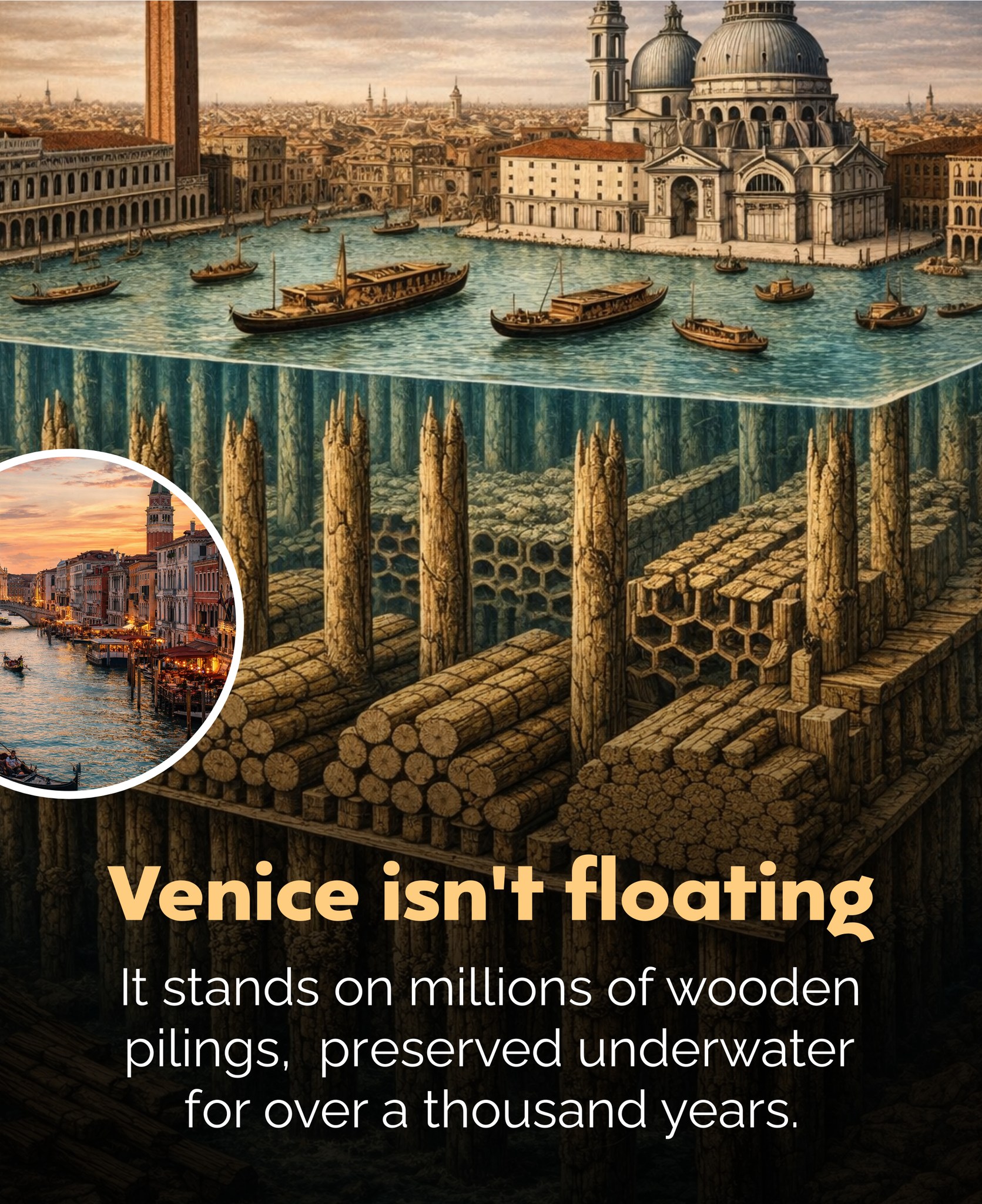
On top of the wooden piles, Venetian builders placed stone—but not just any stone.
They favored Istrian limestone, a dense, water-resistant material quarried from the Istrian Peninsula. This stone does not absorb water easily and resists erosion from salt.
Istrian stone forms the base of many Venetian buildings, even when the upper façades are made of brick or marble.
This careful material choice helped protect Venice from the constant presence of water—a threat that would destroy most cities.
A City Designed for Water, Not Against It
Venice did not try to keep water out. It embraced it.
Instead of roads, it built canals. Instead of drainage systems to expel water, it allowed tides to flow in and out. Buildings were designed to tolerate periodic flooding, known as acqua alta.
Ground floors were often used for storage, not living spaces. Doorways, stairs, and windows were designed with water in mind.
Venice is not a city fighting the sea—it is a city in dialogue with it.
For centuries, this balance worked.
The Role of Tides and the Lagoon
The lagoon is not static. Tides move water in and out twice a day. This movement helps prevent stagnation and distributes sediment.
Historically, Venice carefully managed this system. The Republic diverted rivers away from the lagoon to prevent silting, which could have turned the lagoon into dry land—or unstable marsh.
The city understood that its survival depended on maintaining the delicate balance between land and sea.
This environmental awareness was remarkably advanced for its time.
When the Balance Began to Break
For most of its history, Venice remained stable. But modern interventions disrupted the system.
Groundwater Extraction
In the 20th century, industries on the mainland pumped groundwater from beneath Venice. This caused the ground to compress and sink—a process known as subsidence.
Although groundwater extraction has since stopped, the damage was done.
Rising Sea Levels
Climate change has caused global sea levels to rise. Even a few millimeters per year make a significant difference for a city barely above water.
What was once occasional flooding has become more frequent and severe.
Increased Boat Traffic
Modern motorboats create waves that erode canal walls and foundations. The constant vibration affects the stability of buildings that were never designed for such forces.
ADVERTISEMENT
