
ADVERTISEMENT
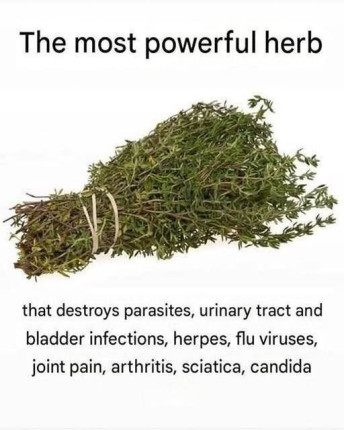
THE MOST POTENT HERB THAT “DESTROYS” PARASITES, URINARY TRACT & BLADDER INFECTIONS, HERPES, AND FLU VIRUSES
What This Claim Really Means—and What Science Actually Says
You’ve probably seen the headline.
Bold. All caps. Impossible to ignore.
“THE MOST POTENT HERB THAT DESTROYS PARASITES, URINARY TRACT & BLADDER INFECTIONS, HERPES, AND FLU VIRUSES.”
It sounds like a miracle. A single plant capable of wiping out parasites, curing infections, and defeating viruses that modern medicine still struggles to manage.
But here’s the truth—one that herbalists, doctors, and scientists would all agree on:
No single herb “destroys” all of these conditions.
And yet, the story doesn’t end there.
Because behind the exaggeration lies something more interesting, more nuanced, and far more useful: certain herbs do have documented antimicrobial, antiviral, antiparasitic, and immune-supporting properties. They don’t replace medical treatment—but they can support the body when used correctly, responsibly, and with realistic expectations.
This article unpacks where the claim comes from, which herbs are usually being referenced, what research actually shows, and how to think about herbal medicine without falling into dangerous myths.
Why People Want to Believe in a “Single Potent Herb”
The appeal is understandable.
Modern health problems are complex, chronic, and frustrating. Antibiotic resistance is rising. Viral infections are persistent. Parasites exist worldwide. UTIs recur for many people.
In that landscape, the idea of one natural solution feels comforting. Simple. Empowering.
Historically, humans relied on plants for survival. Long before laboratories and pharmaceuticals, herbs were medicine.
So when people talk about “the most potent herb,” they’re often expressing something deeper:
A desire for control
Frustration with side effects
Distrust of overmedication
Hope for prevention, not just treatment
But hope must be paired with reality.
What Conditions Are Being Grouped Together—and Why That’s a Red Flag
Let’s look at the list in the headline:
Parasites
Urinary tract & bladder infections
Herpes
Flu viruses
These conditions are caused by entirely different organisms:
Parasites (protozoa, worms)
Bacteria (most UTIs)
Viruses (herpes simplex, influenza)
From a medical standpoint, no single substance targets all of these directly.
When you see claims that lump them together, it usually means one of three things:
The herb has broad antimicrobial properties in laboratory settings
The herb supports immune function indirectly
The claim is exaggerated for attention
Understanding this distinction is critical for safety.
The Herb Most Commonly Behind This Claim
When people make this specific claim, they are most often referring to oregano—particularly oregano oil.
ADVERTISEMENT
